Tag Archives: Feature Post

A Day at: Brighton Racecourse

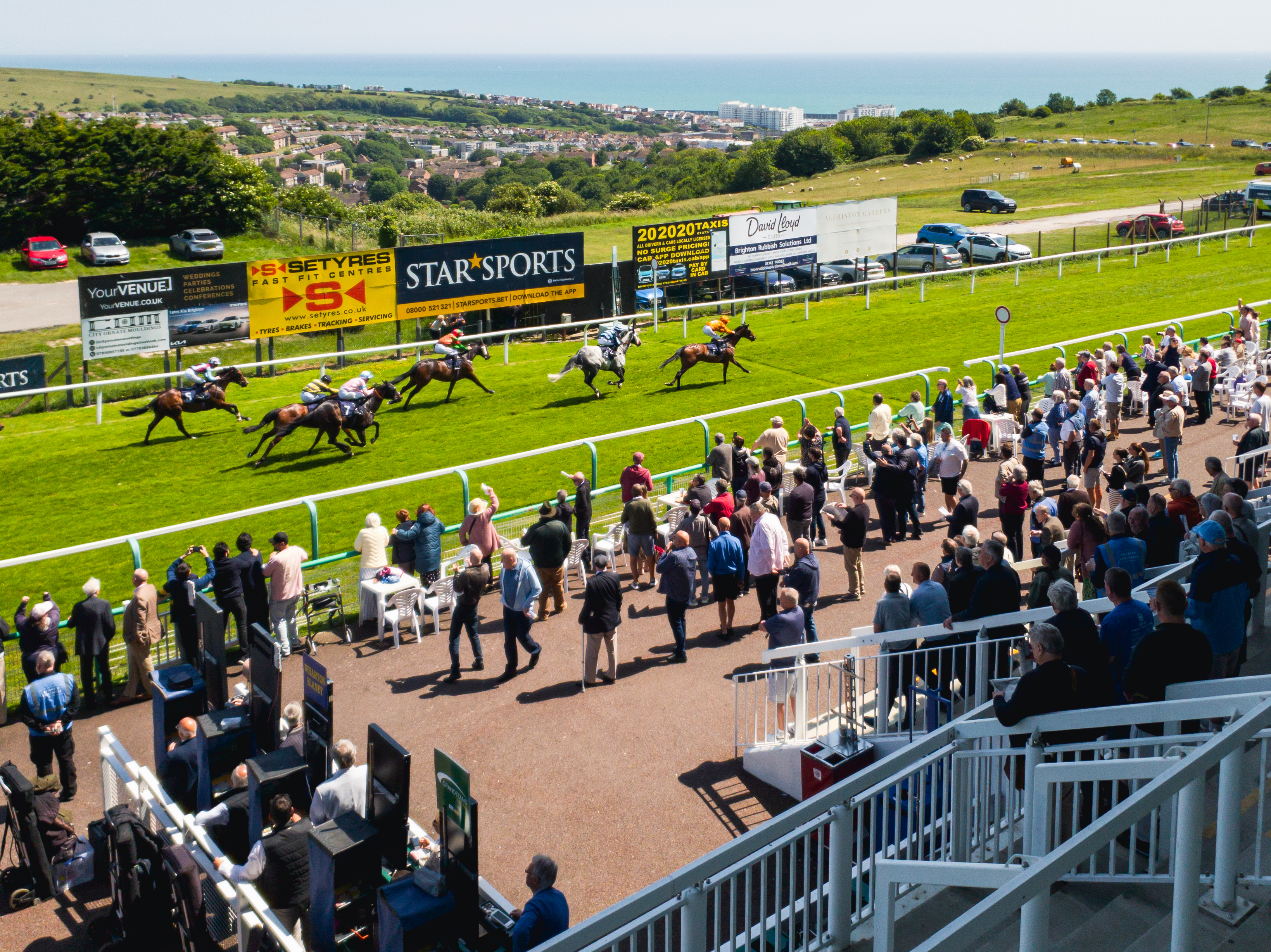
It’s been on my bucket list for a while: finally I made it to Brighton – a racecourse that looks marvellous on TV with its sweeping turns and the blue sea looming large in the background.

I must start with a proper bugbear:  £17 admission for a card with only six races, all class 6, is ‘taking the piss’. Perhaps quality-wise this was the worst raceday I’ve ever been to. Only three of those six races attracted eight runners on the day – shocking stuff; is anyone really surprised the sport is in decline with the public?

In fairness, as a flat racing fan, I found the study for all the six races rewarding, as they were – at the very least – quite competitive and intriguing for their low grade. Which didn’t make it any easier finding the winners, truth told.

For me going over from Dublin for a day-trip, getting to the racecourse was a smooth experience : a quick flight over in the morning to Gatwick, then the train down to the coast, and a 35-minute leisurely walk through Brighton.

Racecourse Experience

First things first: I absolutely love this racecourse! It intrigued me whenever watching racing on TV, and in reality the place is as picturesque as it gets – Brighton could be forcing its way into my personal top-3 of racecourses.

Simply fabulous, Brighton offers everything I love and want from a racecourse – perhaps, bar the missing ice cream van, especially on a hot day.

Of course, it helps when the sun is shining: It’s June and it felt like summer. Appreciated, especially as I returned to a cold and miserable Ireland in the evening, mind – so I really would have loved an ice cream as well!

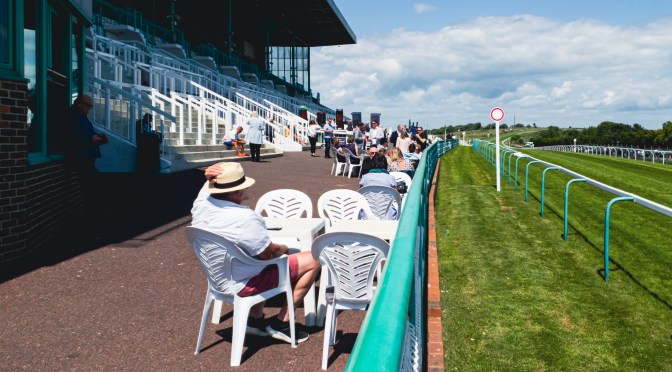
The closeness of everything is perfect at Brighton. It makes it a cosy place to walk around, get a pint, a burger, watch the horses in the parade ring, take a seat alongside the winning post and walk up to the stand and watch the racing with the sensational scenery in the background.

I imagine it can get crammed and uncomfortable on the bigger days when the place is packed; though, for this low-grade Monday afternoon the course was well attended, and created a lovely, relaxed atmosphere.

The views from the grandstand are magnificent. The rolling hills, the sea in the background and the majority of the track observable with binoculars, plus a big screen to follow the action – this is a wonderful place to watch racing.

Food & Drink

Unfortunately it’s customary at British racetracks that you pay through your nose. Brighton isn’t different, to the most part – for example £3.50 for a small, industrially manufactured chocolate brownie. Saying that, a decent burger for €8 pounds is nearly fair in this climate, and a pint of Hobgoblin IPA for £6.30 most likely a steal!

Brighton is a small track, and on low-grade day as this, only half the bars in stand are manned. No problem, I never had to wait long to get a drink. The variety of offerings wasn’t great, but that might be different on bigger days.

Positive is the ample space outside alongside the rails or parade ring to sit down to eat and drink… or simply to soak up the sun.

Odds of Return

4/6

Brighton is a wonderful place to go racing. The easy access, the views, the lovely grandstand, the cosiness – I’ll be back, for sure. Obviously, especially on low-grade day, admission isn’t cheap. That’s a the main thing I didn’t appreciate.

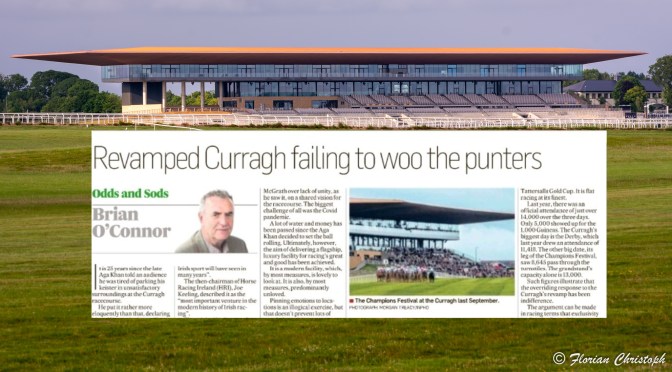
The Curragh “failing to woo the punters”

Groundhog Day: low attendance & poor racegoer experience – the Curragh is in the news for all the wrong reasons yet again.

Irish flat racing HQ staged the 3-day “Irish Guineas Festival” last weekend. A superb package of top-class racing, that included the first Classic races of the new season, as well as an additional five Group races.

Tickets were comparably cheap (€20 early bid), especially compared to other top-class sporting events (or admission to many UK racecourses). And yet, very few turned up to watch Lake Victoria romping home in the 1000 Guineas on Sunday, or a day earlier Field Of Gold getting his stylish redemption in the Irish 2000 Guineas.

No doubt, the shocking weather didn’t help to entice punters to go racing and brave the elements – a tragedy, because the racing was superb. But who can blame those who stayed home: the Curragh isn’t a great place to be at when the weather doesn’t play its part. That’s one of the disappointing facts about this shiny new facility that cost upward of €70 million to redevelop.

However, even in previous years, when the weather gods provided somewhat kinder conditions, attendance figures on Guineas weekend (3 days) didn’t make for pretty reading: 14.088 (2024), 14.773 (2023) and 12.700 (2022). Neither 2000 Guineas Saturday- or 1000 Guineas Sunday broke the 6.000 mark during this period.

This isn’t a once-off phenomenon – it’s a new normal for racing at the Curragh. Attendance for the Derby is anywhere between 10-13k these days, a dramatic decline from 2015, the final Derby run at the Curragh before the redevelopment, that saw a whopping 25.225 huddling around the parade ring to get a glimpse of Jack Hobbs.

Surely, nobody wants to try and rewrite history in an attempt to romanticise the old Curragh. It was a kip when it got finally demolished; walls could tell stories of yesteryear, electric cables dangling dangerously loose in the wind above the heads of racegoers, and the cramming inside the betting hall around the small TVs put those with claustrophobia in a state of paralysis.

Nonetheless, I used to be a member at the old Curragh and I loved the old, shabby place. The available space was rather well utilised to the most part, there was a logic flow through the track for the racegoer and even though the parade ring was a lot smaller than the new one, you still saw the horses!

Perhaps I am romanticising the old Curragh?!

The annual membership was affordable and provided dedicated parking, quick access to the track, a charming members bar overlooking the finish line, a designated members area to watch the racing with the best view across the track, and the occasional side offerings like trips to Coolmore Stud.

Back then the membership was about €180 and seriously good value, even if you couldn’t go every time they raced. In 2025 the membership fee stands at a whopping €350 (mind, when they reponed it was ‘only’ €265…. call that inflation?!).

Granted, that’s still not bad value if you go to all the 24 days. But who does that? Very few. It’s a steep price. In the past it was decent value even if you only went 10-12 times a year, plus the added perks made it worthwhile. Not so much these days.

Anecdotally (I would love to see official figures) the Curragh lost members during the rebuild (when they offered temporary facilities but charged full price, nonetheless) and certainly in subsequent years, due to the significant price hike.

The sad reality is, members or not, ever since the reopening of the redeveloped Curragh, people have voted with their feet and stayed largely away. The drop in attendance for marquee race days, as highlighted earlier, is nothing less than dramatic.

That’s strange, because logic would dictate that a new, modern facility would encourage more and not less people to attend fixtures.

While the official attendance figures for last weekend haven’t been released yet, it’s hard to believe they’ll be any better than the aforementioned figures in 2023 or 2024.

I was there and it didn’t feel a busy on Saturday. It’s certainly eye-opening when AK Bets outlines in their excellent The Racing Room Podcast that they took merely 95 and 55 on the two Classic days. On the lesser days, the place is basically deserted.

The question is: why? Why do people vote with their feet? It can’t be the price point: admission is incredibly affordable, even for the best days of racing at the Curragh – I want to highlight that as a clear positive (while I remain critical of the pricing for the membership) – the early bird offerings are superb value for money. €20 for the 2000 Guineas, €25 for the Irish Derby, for example.

The place hasn’t moved. It’s where its always been. Getting to it is possibly by public transport via bus or train and subsequent shuttle busses, albeit not as plain a sailing as it could be – I did that many years while living in Dublin. Car parking is free onsite. Food and drink, while not cheap, is competitively priced in comparison to rugby, football or GAA.

Why then the dramatic drop-off in attendance? From my personal experience the often cited pain points with the new Curragh mirror the ones I see as well:

  • Poor design and use of the space available – some key areas feel overcrowded even if overall attendance is low.
  • Parade ring isn’t a great place for viewing the horses ((despite having been redone!).
  • Main hall inside the stand gives the vibe of a train station or airport arrival hall.
  • Not enough seating available inside.
  • The roof’s still whistling furiously in windy conditions.
  • Poor protection from the elements in the grandstand.

Some of these criticisms are possibly harsh and contradictory. Racing is an outdoor sport, you can expect to get wet if you want see the horses in the parade ring.

On the other hand, where money’s spend (especially tax-payers money) an expectation of excellence follows. And this expectation of excellence isn’t met at the new Curragh. Be it the roof, be it the facilities inside, be it the poorly designed parade ring.

It’s also hard to imagine that the place could pack more than 15.000. It would be total carnage, with multiple bottlenecks and poor crowd flow. Even with only 10.000 onsite, these issues persist when previously at the old site 20.000 could fit relatively comfortably.

I want to be fair and balanced, and give credit to recent attempts to improve the experience. New marquee tents, food vans, a SPAR inside, more tables and seats. Admission has been made more affordable. So, something is done. Yet, it’s not enough to make you want to spend half a day there. It remains a cold, windy and rather uncomfortable place. Smaller, older tracks around the country do it much better.

Perhaps, for plenty of people the habit of going racing at the Curragh got broken during the redevelopment phase as well. Some never got back into the habit. Some returned once or twice and didn’t enjoy the experience. They’ve never been back.

There’s also a considerable lack of visibility inside the Kildare community. I live in Naas. It’s a 15min drive down the M7 for me. I can’t recall having seen any marketing for the Guineas Festival. Unless you’re a racing fan, you probably wouldn’t have known there’s two of the most important races in the Irish flat racing calendar taking place over the weekend.

Personally, I can’t offer many solutions. Saying that, it’s not my job. I only speak as a racing fan and from my personal experience. And that experience hasn’t been great.

I feel the bird has flown, and the glory days will never return. Flat racing has never been that popular in Ireland. Nonetheless, there shouldn’t be an obvious reason why attendances at the Curragh have dropped so dramatically since the redevelopment, when plenty other sports are thriving in the post-covid era.

There shouldn’t be one obvious reason. Yet there are multiple obvious reasons for the decline. And they are self-inflicted. The blame lies firmly with the racecourse management. It seems, as populist as this may sound: the track has been build for those in the posh seats, with us peasants (aka the average racegoer) forgotten.

A Day at: Hamilton Park

I always wanted to get a first-hand experience of Hamilton Park, a track where horses come to a near standstill in the closing stages thanks to a notorious stiff finish to the line.

Last weekend the opportunity for a maiden visit to Hamilton Park finally presented itself: that’s UK racecourse #17 ticked off the list for me. This May 4th visit coincided with the tracks opener for the in 2025 and was also billed as “Family Day”.

It showed: Hamilton Park was rammed with families. Screaming kids everywhere. The place was packed, perhaps the balmy spring weather a great help to get people through the turnstiles as well.

So here’s a quick report of my day at Hamilton Park, and a final assessment of what are the odds of me returning in this life.

Let’s Go Racing

Situated just outside of Glasgow, getting to Hamilton is pretty straightforward: for me that meant catching a flight at 6.50am in Dublin, arriving with ample time for a breakfast fry in Glasgow, before then catching the train from Glasgow Central to Hamilton West, a 30-minute ride with ScotRail.

The £6 for the off-peak return ticket felt fair (plus £16.50 for the luxury of taking the airport express bus to Glasgow city centre).

It’s another 25-minute walk from the station to Hamilton Park – not the most scenic walk, that’s for sure – though, I took a little detour through a rather deserted Hamilton on that Sunday morning.

In any case, as far as travel to a racetrack goes, Hamilton Park is generally quite easy to get to with public transport, and that’s a big plus for me.

Not a Cheap Day

An adult ticket purchased in advance was £27. That’s okay for British racing, but feels steep compared to Ireland, given this was a bog-standard day with the one class 3 Handicap as the ‘feature race’.

In comparison: ‘Early Bird’ tickets for Irish 2000 Guineas or Irish Derby day cost €20 and €25 respectively. Irish Champions Weekend Saturday – arguably one of the best days of flat racing in the world – is still cheaper than the ticket for Hamilton.

I know one can’t compare like for like necessarily. But I do feel it will come to bite the sport in the UK sooner rather than later that parts of society are effectively priced out of it.

And it doesn’t stop with getting through the door. The rip-off proper starts inside. I was gobsmacked by the prices for food and drink. Yes, it’s a sporting event, things cost more there, yet it seems bonkers that you have to pay £7.30 for bad lager, or £12 for a pretty simple Chicken Burger (without chips – those are a fiver on top!).

Three thin donut rings with a glaze of sugar? £4.60. The seven quid for a the Guinness in a plastic cup was nearly “value for money” at that rate.

And let’s not forget going racing without having a bet isn’t really an option for many people, either. So it all adds up: a day at the races is expensive.

That’s nothing new, and it’s not really an issue for me, truth told – I’ll continue to fly over to go racing in Britain, simply. because I love the sport.

Nonetheless, I wish racecourses (not all, but a majority) wouldn’t “take the piss” if it comes to prices for food, drink and or even the cost of entry and having a decent view of the action.

Rant over.

The Racing Experience

The Class 3 Handicap over 1m 5f and Class 2 Novice Stakes over the extended mile were the highlights on the card that offered seven races in total, with a bunch of lower grade handicaps filling the rest of the card.

Sallaal, the winner of the Novice Stakes looked a smart prospect. The 91 rated son of Frankel could go on to do better things, although he seemed quite unruly during the preliminaries, having unseated the rider and needed to be walked all the way to the post.

I truly enjoyed the compact nature of Hamilton Park. The distances between pre-parade- and parade ring, and then to the grandstand, are short. Bars and facilities always close. Betting ring right in front of the stand.

There is one stand, the views are fine from there, except the initial part of the loop when horses turn left for the longer races, everything else is visible, and the long straight with the horses climbing the last 2 furlongs makes provides an excellent view of how each race unfolds when it matters most.

Obviously I don’t know what’s the experience on a normal day, perhaps family day didn’t help, but a few me opportunities to sit and relax would have been welcomed.

The small restaurant and bar/betting shop area inside the grandstand were always full to the brim and it was impossible to find a spot to sit and just sip a coffee or beer while studying the racecard. A small coffee van. like it’s present at most Irish tracks, would have been nice too.

Odds of Return

2/1

Overall I enjoyed my visit to Hamilton Park. The weather helped, and while it was packed, it never felt too uncomfortable, except the lack of options to sit. I mentioned my gripes with costs of going racing here, specially given this wasn’t a “Premier” day.

I wouldn’t mind to be back one day. If I never get back in this life, it won’t be a big issue, either. Maybe not on “Family Day”, though. The view from the stand of the long straight is class, and the compact nature of the course ideal.

I hit myself with a ProCush Whip

Would you believe it: I am a racing fan for over a decade and never had an actual whip in my hands! Time for a little self-experiment.

I’m not an exception. That much became pretty clear in all the recent – often heated – discussions about the new UK whip rules on Twitter.

It was a tweet from respected racing journalist Graham Cunningham that pushed my curiosity to the point where I simply had to get an answer to the “whip question” for myself: does it hurt?

As you read through the replies to Cunningham’s tweet you can’t help but notice how the vast majority of people speculate. Few speak from actual experience of real-life experience with a ProCush whip.

The ProCush Whip

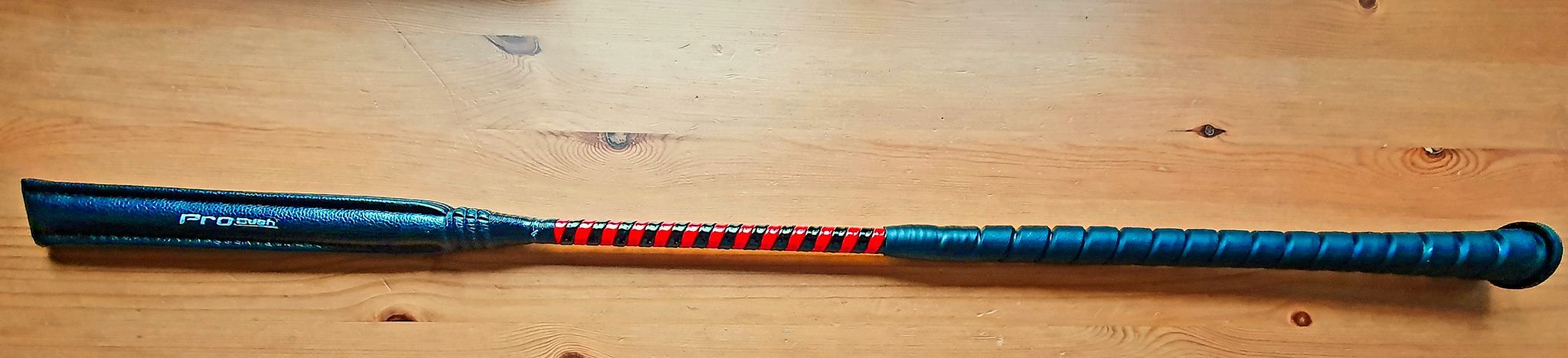
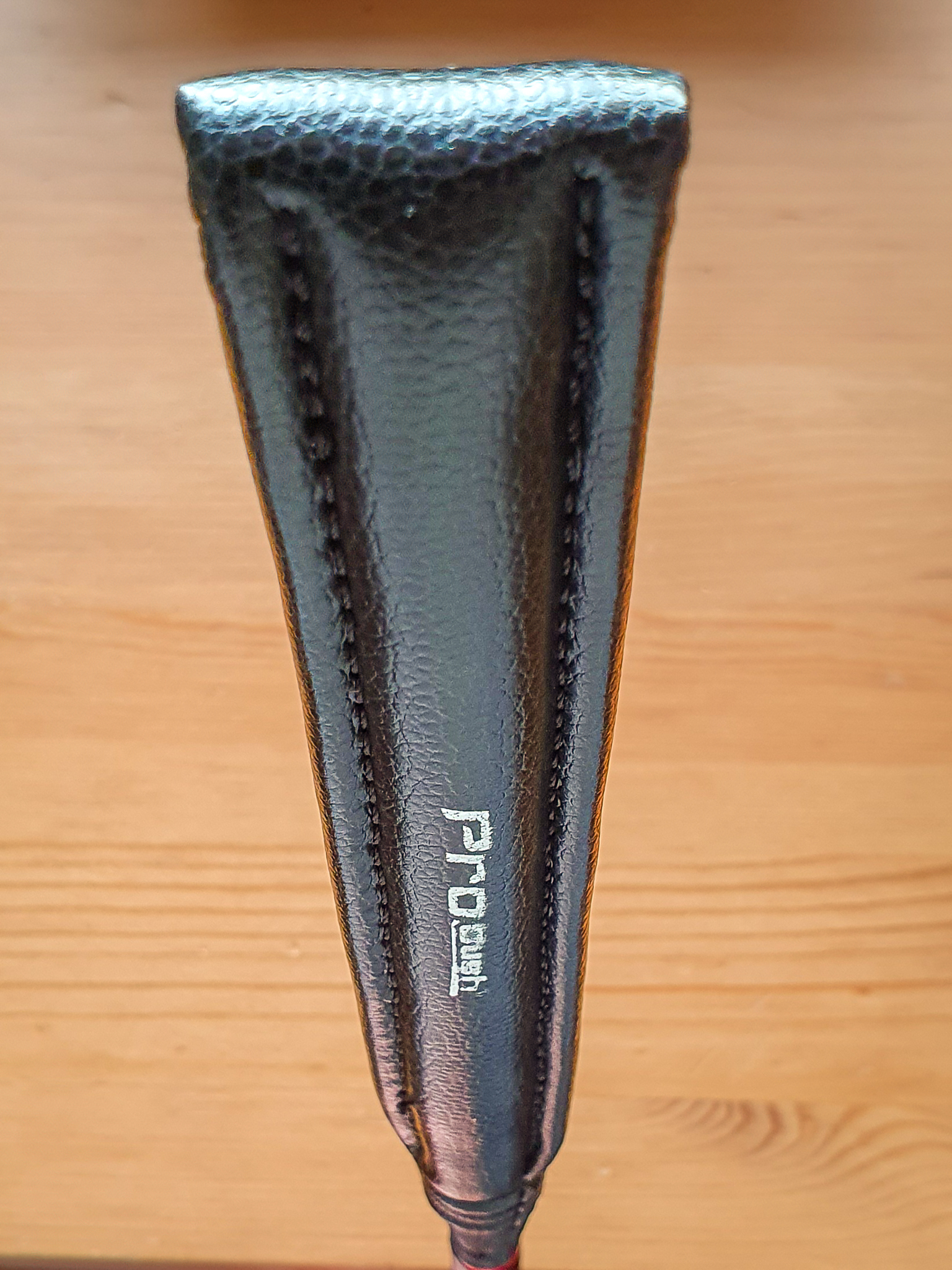
So I ordered one. To be precise: the “Flexible ProCush Flat Whip with Micro Chip”. It cost about €50. Sold as “designed solely for flat racing with an 8 inch padded shock absorbing end”.

I have it here, right in front of me, as I type these words: It’s quite large – 70cm long – at the same time the whip is incredibly lightweight – about 150gr (less than half a pound). It’s certainly flexible with a somewhat “rubbery” feel when you swing it.

The end is “softish”. You can squeeze it; there is some give. It feels a bit like padded foam. However, and that is also the truth, it feels less soft than I had envisioned after watching the explainer videos recently published by the BHA.

This isn’t a pillow on a stick. It’s somewhat soft and somewhat firm at the same time, if that makes sense. Curiously, the harder I squeeze, the softer it gets.

At the bottom of the handle of my ProCush whip it states this type of whip is BHA approved. Good to know. Apparently there is a microchip somewhere in there as well. Not sure where, and even less sure why.

First impressions: I guess you can kill with this device: a fly – if you’re quick and do it the right way. Not much else could be killed with this thing. It won’t work as a torturing device.

The Whipping Experience

What happens if I smack my hand and fingers (I also smacked other parts of the body, for reference) with the most incredible force my little arms can create? Obviously, that was the key question to answer.

Time to swing the ProCush and give it a good lash. Initially I try it on my own before asking someone else to grab (enjoy?) the opportunity to hit me.

There is a loud, slapping noise….

I expected the slapping sound. It is familiar from my visits to the racecourse. Although the sound is duller than I heard it there.

It somewhat hurts for a brief moment. Hurt and the feeling of pain are relative, though. In German we have a word for this type of sensation: “zwiebeln”. “Stung” seems be to the closest description in English. Although, that feels too harsh to describe the actual feeling.

Any sensation of pain subsides rapidly. There are no lasting marks on the skin. This isn’t painful in the sense of what I have in mind when thinking about something truly “painful”. Yes, there is impact. Yes, there is a form of pain. That’s the truth. Yet, you can’t compare this to a “proper” whip in any shape or form… nor to being hit by a leather belt.

The human hands are pretty sensitive (so is my backside, which got smacked as well). Unlike, as far as I understand, the huge hindquarters of a thoroughbred – the position where they are hit with the ProCush. Obviously it’s difficult to know what a horse truly feels when hit by a jockey with force.

At the same time, my instincts tell me that in a race situation, when the whip is used, horses are full of adrenaline and will hardly feel a thing beyond the sensation that something made contact with their skin.

The smacking noise, however, as I have observed myself on the racetrack, is quite loud, and it certainly would put me in a state of alert if it suddenly appears out of nowhere.

I also feel the current instructions for use of the whip make it difficult to hurt a horse. You are not allowed to strike above shoulder height. I tried myself, and it’s not that easy to get an overly dramatic amount of leverage and force applied in this position. Granted, I am not a jockey who’s doing this for many years.

ProCush Summary

This little unscientific self-experiment taught me something: the whip debate is overblown. Most people have no clue when they talk about the ProCush. They never had one in their own hands and have no sense of how it feels to be hit with the whip.

Yes, it’s not a plush pillow by any means. But it’s not a whip in the traditional sense of a whip, either. It’s a device that elicits a sensation on the skin for sure. It creates a loud, smacking noise upon impact. It stings for a brief moment – at least on a human hand. And that’s it. It’s not a torturing device. It’s totally unusable to really hurt (i.e. injure) anyone with it.

I must say with this experience in mind, I can better appreciate why the ProCush is used as a tool to focus a horse on the job. Sudden contact of something external with the skin plus a loud noise would focus anyone and anything on the here and now. It would illicit a response of total alertness.

In that sense, I can see how it can help to galvernise a horse or keep it focused, when it matters most in the closing stages of a race.

Future of the Whip

My personal view is clear: I have no issue with the ProCush whip being used. Is it really required, though? That’s a question I find tricky to answer. I am not a horseman, never rode beside a pony on a holiday farm and therefore can only go by what I observe in racing jurisdictions that have banned the whip.

If I see races from Scandinavia, for example, I dread the time when the use of the whip for encouragement is banned in the UK. Those races don’t make for pleasant viewing. The fact jockeys have little options to re-focus their mounts in the closing stages makes these races boring. They seem to favour one particular type of horse. Therefore appear dull and one-dimensional to me.

That’s my personal view. There are plenty others who seem to be of an opposite view. That’s okay. There isn’t a right or wrong answer here. If racing in the UK, and perhaps at some point in Ireland, would go down the same route as Scandinavia, then that’s the way it is. I wouldn’t be interested in the sport much longer, though. That’s also okay.

On a final note, one thing is totally obvious: the ProCush whip is the smallest issue racing faces to ensure a sustainable future where it remains relevant as a sport with a vibrant core audience that follows with interest.

The whip debate is a distraction. Perhaps a welcoming one for the governing body in the UK. Distracting from their colossal failings to address the real issues. I fear for the future of the sport. I am saying this as a racing fan first and foremost.

No humans were harmed in the making of this article

5 Golden Rules – Betting On Horses

Whether you aspire to become a serious punter or simply have a flutter for the enjoyment of the sport, it all boils down to two pivotal points – at least in my view:

  • The desire to win money. 
  • Losing money isn’t fun.

Personally, I have been on a long journey when it comes to betting in general, particularly when it comes to betting on horses. I tested and trialed many ideas, systems and angles – won some, lost some more – be it laying, trading, naive attempts of building automated betting models as well as all the way back to conducting the good old-fashioned form study.

In the end all of that can be successful. It depends on the type of person, what you prefer, what suits your own style and mentality.

These days I’m using a hybrid method: data based as an initial selection step – uncover specific circumstances on any given day which then initiate action to dig deeper, i.e. put my own analysis on top of it. It took years to come to this point – a point where it all clicks, works and is profitable.

While the approach may change again (there’s no standing still in betting = what works today may be obsolete tomorrow) what stays with me are a simple rules that act as a guide of how to approach betting on horses.

These rules are obviously highly subjective in their significance and impact. For someone else they may seem trivial, maybe controversial or even wrong. Nonetheless, I imagine that following these rules can help anyone to be a more successful punter in the long run, and with that enhancing the enjoyment of “the game”.

:::::::::::::

#1: No Bet? No Problem.

The first rule is one about discouraging from the actual act of betting. It’s the most important rule for the simple fact that you’re usually investing your hard earned money when betting. Earning money is far more difficult than losing it in a matter of minutes in the 4.45pm class 5 Handicap at Wolverhampton.

In our day and age bets can be made as easily and swiftly as the simple touch on the screen of a mobile phone. It’s the fastest way of losing money. Not betting means not losing money. Obviously!

What we really want, though, is to maximise our chance of winning when finally decided on a bet. Yet, more often than not, I argue, it’s about being prudent and working along the lines of “letting go” and not having a bet.

To illustrate what I mean let’s imagine the following scenario: most likely we all have been there, studying a race for a significant amount of time – “putting in the effort”, analysing video footage and making plenty of notes and whatever else you do to work through a race.

What’s the result after all the hard work? More often than not you likely won’t have a strong feeling about any horse in the race. You haven’t discovered any value opportunity at all! Yes, you may ‘fancy’ a horse – simply because you think “he’ll run well”. The horse, possibly a 5/1 chance, seems like a “fair price”. There is an obvious urge:

“Hey! I’ve done all the work, I want my reward: a bet!”

From my experience there can be this overarching feeling of “what if the horse wins and I’m not on?!”. We all know this feeling if this horse we somewhat fancied, but didn’t back because we didn’t believe there was enough juice in the price, crosses the line in first place. Crap feeling. It hurts. A missed opportunity?!

reward

Perhaps the next time you gonna follow your “gut instinct”, you back the fancies you didn’t identify as value but feel they should run well. A winner is a winner after all and sure enough some will win. But what’s the chance those winners are going to be offsetting the losing bets in ROI terms in the long run? That’s the value question that is the fundamental aspect of understanding how profitable betting works.

I firmly believe once you subscribe to this sort of mentality – following the gut feeling  – as described above, it’s game over.

When betting on horses on a day to day basis one encounters these type of scenarios numerous times. You put in the time and effort but at the end you’ve got no bet to show for all the work. How annoying! However, fact is: you haven’t lost any money….. yet. And that is a good thing. Because you really want to invest your money when you truly have identified a proper value opportunity.

Also: even if not having a bet as the outcome of analysing a race, it may still have been time well spent: you may have learned something about some of the horses in the race for future studies or possibly uncovered an interesting trend to monitor moving forward.

Put simply: it’s not always lost time only because the effort didn’t result in the desired outcome of finding a bet. The opposite is true. No bet? No Problem.

#2: Let Go of Emotions.

This rule links back to rule #1. And it’s easier said than done. As in the example outlined above: seeking the reward for an hour of studying a race – having a bet – despite the outcome of the analysis saying one shouldn’t have a bet, is seriously influenced by our emotions and feelings.

It’s a natural human reaction to be seeking a reward for work (having a burger or ice cream post gym, anyone?). You have to learn to let go, though. Stick with the objective analysis you’ve already completed and its corresponding result: no bet.

What can help in this type of situation: if you fancy one or two horses in a race and feel the urge to reward your work with a bet, even though your objective analysis comes to the conclusion that the odds aren’t good enough, simply writing down the pro’s and con’s for or against the horse side by side does help me. Having the cold, hard facts written down on a paper right in front of us can take the emotions out of the equation.

Emotions come into play in other situations as well. If things go well or if things go badly. We may get enthusiastic. Euphoric. Let’s strike while the iron is hot. Or: disappointment. The feeling of depletion. Anger. It’s the jockey’s fault. Let’s chase the losses. A sudden change in a method proven over time…..

emotions.png

Emotions cloud our mind. They cloud our objective decision-making skills. Fact. Therefore: never get too high and never get too low. You can be happy if your work pays off and you can be disappointed if the long analysis you did and the great value horse you identified didn’t get the luck in running. But it should never lead to subsequent decisions based on these emotions.

A good piece worth reading in this context is: How I Learned to Love Variance

#3: Think Big Picture.

Horses have bad days, jockeys make mistakes and variance is the reason for winning- and losing runs alike. The only thing that stays constant: if you find value bets – i.e. the horse has a better % chance of winning the race than the odds suggest – you will be a winner in the long run.

In that sense it is important to see the bigger picture: the race you lost because Jamie Spencer was sitting and suffering on the well-backed favourite at the back of the field and got his mount out too late…. it’s only a single race.

In the context of the hundreds of other races you’re betting o this sort of “bad luck” will be neglectable and is going to be offset by those times where you have the eventual winner on your side, even though he wasn’t the best horse in the race, perhaps because the best horse was boxed in and made a run too late as the jockey was overconfident, while your lad got a clean run from the front in a slowly run race, hence you’ve been the “lucky one”.

In the long run this one race won’t matter. It won’t matter because if your bets are consistently value bets, if you got an edge, if you see something others don’t see, and if you – leaving emotions out – keep following whatever method you have to identify the value, you won’t need luck today to be a winner tomorrow.

Understand this and it becomes much easier to see the one race in context of the bigger picture. Which ultimately helps to control emotions and feelings, hence is vital for making the level-headed decisions.

#4: Follow the Concept of Value.

What is this ominous value in betting we hear so often referred to by experts, jockeys and punters? Google says this:

“A value bet is the one where you believe the chances of one team (or horse) winning are better than the odds suggest and all you need to do is to take advantage of the situation.”

I love the last part. As if it would be that easy….. of course it isn’t. The concept of value works different for different people. However the essence of it – you know your horse has a better chance of winning than the layers’ assessment – will remain a constant.

It’s vital and is the one key question you need to ask yourself before backing a horse: is it value? If the answer is “No” or “not sure” then move on, refer to rule #1 and #2, there’s nothing to see here. It has to be a resounding “Yes” for a confident selection – or as I call it: “quality bet”. Otherwise: no bet? No problem.

Some people might go into more detail. They make a 100% book and assign % chances to each horse which then translates into odds. In its most simple form: if you assign a 10% chance to a horse that translates into fair odds of 9/1. If a bookie offers 10/1 you’ve got a value bet.

In theory, if you always back horses that have a better chance of winning than the odds offered, you will make a certain profit long-term. It’s the one thing a successful punter can’t compromise on.

How punters come to the conclusion of identifying value is a personal choice and responsibility. And obviously there are a few more nuances to it than my simple explanation. Nonetheless, what holds true: finding value is crucial.

A good read if you want to dig deeper on this topic: What is a Value bet?

#5: Bet Win Only.

Obviously this is highly subjective. But it is likely, and studies have shown the same, that if punters back their selections “win only” they will win more in the long run. One could also argue: if you didn’t believe strongly enough that your horse has a better chance of winning than the odds suggest – even if it is a 20/1 shot – why bother backing the horse anyway?

Place terms are often poor, they favour the bookie. Keep in mind even a 9/1 “each-way chance” – a relevant example because this is often the cut-off price for punters as their confidence in win-only dwindles and they feel it’s big enough a price for a decent place return – will only place around one in four times (~7% win). Not exactly ‘value material’, particularly in races with 1/5 place terms.

Even if you are decent at identifying so called “each-way value”, you’ll struggle to turn this into sizable profits long term – I believe.

Now, you can make exceptions to the rule: put simply, some people will be better suited to each-way backing due to the nature of their psychology. Even if in an ideal world we fully eliminate emotions and feelings, the reality is a different one. We’re humans after all.

Some punters simply can’t stand losing, let alone long losing runs – which tend to be inevitable if you back win-only.

Each-Way betting offers the opportunity for tasting success on a more regular basis. There are professional punters who know full well they would make more money if they’d go win-only all the time. But if they would do so their mental state would prevent them from being successful and making confident selections day in day out.

There are also some other reasons to consider each/way betting once in a while, as outlined in this excellent piece by Simon Rowlands.

With that in mind, it is not to say you can’t be profitable backing each-way. But it is much easier in the long run to go win-only – if you can be endure losing runs. It’s certainly not for me, although I still have the occasional each/way bet, regardless.

Most will agree, though: keep your fingers off multi-bets, parlays and the likes. You’re gonna be the bookies best friend if you’re handing in a “Lucky 15” every Saturday.

Yes, the promise of a massive payout is sexy. In truth, you’re hardly ever win one of these bets, if ever! The value on these multiples is non-existent. It’s heavily skewed toward the bookmaker. Sure, some folks get lucky. But that’s it: luck. Some people get lucky in the lottery. Luck isn’t what influences successful long-term betting.

“But it’s fun!”. Some may say. And it’s probably true: having a Lucky 15 running on a Saturday through the ITV card can be fun. But only until one sees the first two selections finishing tailed off. It’s the moment when reality bites: losing isn’t fun. Never.

#Bonus – Put in the Effort.

Racing is an immensely complex sport. So many parameters to consider. So much information available through many different resources. You have to make sense of it and find a way to put the puzzle together in a way it works for the individual.

Consistency breeds success (not only in betting). This requires some level of (minimum) effort that goes beyond checking the left-hand column of the racecard and reading the spotlight comments.

Questions I consider asking regularly: what is it that you do, you know and see that others don’t do, know and see? What is your niche? How do you get to a point where you can confidently make decisions on the value of a specific horse and its price in a given race?

To get there requires effort. One could say it requires work. Doesn’t sound like fun? Well, we love horses. We love racing. If that wouldn’t be the case we’d find it difficult to put in the effort – it would feel like “real work”.

I know if I put in the effort it feels like work. Yet this is work I do enjoy, in fact. Because I do love racing. And I do love working through the form book, through the stats and video clips, figuring out the value prices, solving the puzzle and finding winners…. and having a positive ROI to show for all the effort in the long run is the reward.

Without this enthusiasm for putting in the effort you’ve lost before even started.

Side Notes: a couple of thoughts I want to add – not specifically rules, more general guidance in addition to the Golden Rules that are important for me:

  • Keep a Record: you will struggle to keep track of your P/L if not. You will also be able to identify where things work well for you. Is there a specific race – class, trip, course – where you’re consistently able to find value? Are there specific situations where you simply can’t get it right? Keeping records is paramount.
  • Realistic Expectations: It’s unlikely you’ll get rich with your betting. But if you do it smartly you may earn a little extra cash that can pay for holidays, a new car or at least the pints and entrance fee to the race track. Something like 5-10% ROI is certainly attainable.
  • Consistent Staking: Find the best method for your bank and betting style and stick with it. I use a flat stake to keep things simple. All I need to decide: do I believe so strongly in the chance of this horse that I want to invest? If so then I do want to be on with my full stake, regardless of price. I understand proportional staking may be the more profitable way to go long-term. But in the end it comes down to what suits ones personality best.
    Recommended read: Choosing A Staking Method
  • Avoid Odds-On Shots: value can be found in any price – even a 2/5 shot could be value. But let’s face it: the amount of races you have to win consistently to make a profit is high. Racing is a volatile sport. Things can go wrong quickly. Even odds-on shots win only about every second race. Backing all odds-on shots would result in a certain loss. Of course nobody does that. But you would have to be incredibly selective and a superb punter to turn it into a profit long term. It’s not for me. One saying resonates with me when it comes to odds-on shots: “you can’t buy money”.

:::::::::::

There you have it: those are my golden rules of betting on horses. Obviously a lot of is deliberately kept simple. Further details need to be filled in by oneself.

The issue of “getting on” isn’t addressed, obviously. I’d argue being successful in the long run isn’t the challenge any longer thanks to all the resources available today. But account restrictions and premium charges make life difficult. That’s a different topic altogether, though.
Favourite Horse: Paco Boy

2008 was the year that my interest in horse racing became serious. In my memories these are the good old days – a time when betting on horses wasn’t about ‘making it pay’ but all about learning about the sport every single day.

What coincided with this time, and it probably was one of the main reasons why I became so fascinated by horse racing, was the emergence of a number of legendary horses. To this day I do become a little bit emotional if I hear their names, to be honest.

Possibly not quite in the league of legends, yet the horse I well and truly fell in love with, was in his early days very much doubted whether he could become what he ultimately became: a top class miler. He showed plenty of speed and a dazzling turn of foot but may well be short of the required stamina?

It was exactly this incredible change of gear – the moment when a motionless Richard Hughes pressed the button, when the response was instantaneous – something that was visually so impressive and outlandish, certainly not observed in any other sport I have ever watched – that made me fall in love with Paco Boy.

Paco Boy was a promising juvenile, however he took his career to new heights in his classic year, particularly in the summer and autumn months.

He landed a number of graded races and finished the season with an exciting first Group 1 victory in the Prix de la Foret at Longchamp. It’s a shame Paco Boy didn’t get the chance to run in the 2000 Guineas that year, but at that stage he was still an immature horse with question marks over this stamina.

A year older and wiser, after a disappointing reappearance in Dubai, Paco Boy then proved his class thanks superb victory in the Queen Anne Stakes, when an ice cool Richard Hughes showed his trademark patience, delivering Paco Boy late in the race to produce his own trademark turn of foot.

The partnership of Richard Hughes with a horse like Paco Boy, who needed to be ridden with patience and confidence and delivered late, turned out to be an irresistible combination. It didn’t always go to plan – on the days where it did it turned out to be as spectacular as racing can be.

To this day for me personally the most spectacular, visually exciting and explosive demonstration of an instant acceleration and manifestation of pure class is the one Paco Boy produced in the 2010 Lockinge Stakes:

Richard Hughes completely motionless, with two furlongs to go still sitting behind all his rivals, ever so slightly edging closer while calmly steering Paco Boy through an opening gap; approaching the final furlong marker and everything else around him is hard at work – “Paco Boy is laughing at them”, screams an astonished Richard Hoiles in the original track commentary!

Once asked to win the race Paco Boy puts it to bed in a matter of strides. Mind, this is a Group 1 race!

Extended footage can be found here – including a few shots of an emotional Richard Hannon, who shed a few tears that day and also is quoted saying “I’ve got pictures of him all over the house”!

A career spanning over four seasons – 24 races, 11 victories, 9 in pattern class, three Group Ones, including the Queen Anne Stakes at Royal Ascot.

On the rating front: Paco Boy ran twelve times to a Tospeed Rating of 100 or higher (six times >110). That is an incredible level of consistency for successive seasons. Not many horses are capable of achieving this. In his prime on fast ground when tracking a decent pace Paco Boy was nearly unbeatable.

Yes, one could potentially point out: “what did he beat?”. The form of is Queen Anne and Lockinge Stakes victories didn’t work out all that great in hindsight. Nonetheless he beat and fought it out with the best of the best among the milers of that era and made some really good horses look rather ordinary.

Ultimately, when do you ever see a horse in a Group 1 contest cantering all over his rivals, hard on the bridle, approaching the final furlong marker? It’s a rare feat and something special.

And not to forget: he chased the almighty mare that is Goldikova on more than one occasion home. I maintain to this day he was the better horse in the 2010 Queen Anne Stakes and Richard Hughes, on that day, left it simply a little bit too late (as a matter of fact Paco Boy recorded a higher Topspeed rating than Goldikova that day).

Put simply: Paco Boy was the most exciting horse I have ever followed as a fan of the sport. He was my first real “love” in the world of horse racing. Although he is closely followed by possibly the greatest racehorse of all time. More on that in the next part of this series.

This Is Turf Paradise

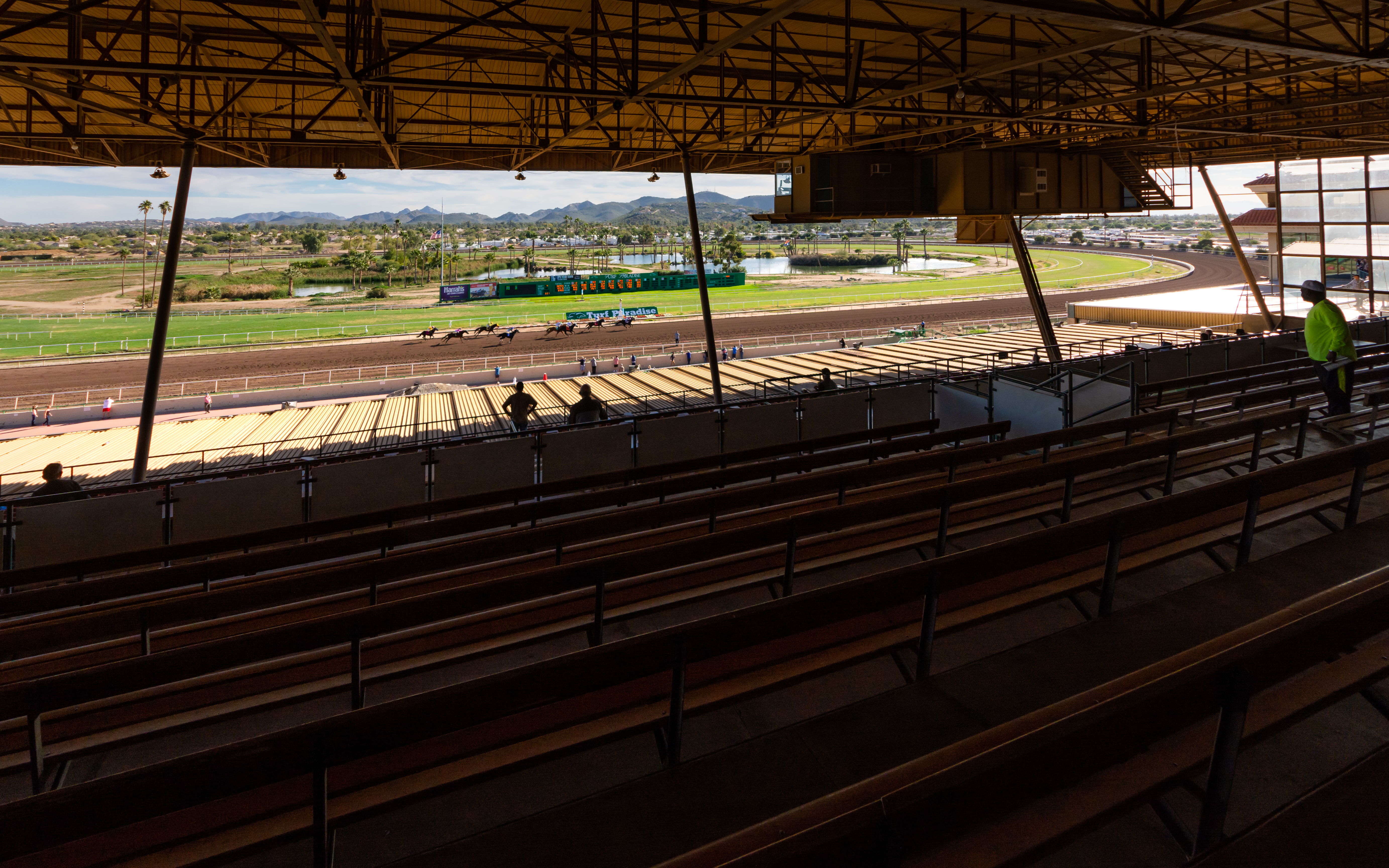
Right now I am over in Phoenix, Arizona. What a great opportunity to pay a visit to the local race track – Turf Paradise

After having been to go racing at Aqueduct, Golden Gate Fields and Los Alamito, Turf Paradise is the fourth track I’m able to visit.

In comparison to the other three tracks, Turf Parade is on the small side. In fact, much smaller. Why? No casino!

Turf Parade strikes me as quite a compact race track, located on the outskirts of Phoenix, easy to get to because of its proximity to Interstate Highway 17.

In saying that, due to their size and lack of humans onsite I felt pretty lost at the other tracks. The day became dull after the first few races, in truth.

Well, it’s mid-week racing, there are only few people  keen or able to come racing on a Wednesday – it can be lonely onsite. Casino-race tracks are often huge places: wide and open spaces add to the feeling of emptiness anyway.

DSC_9610

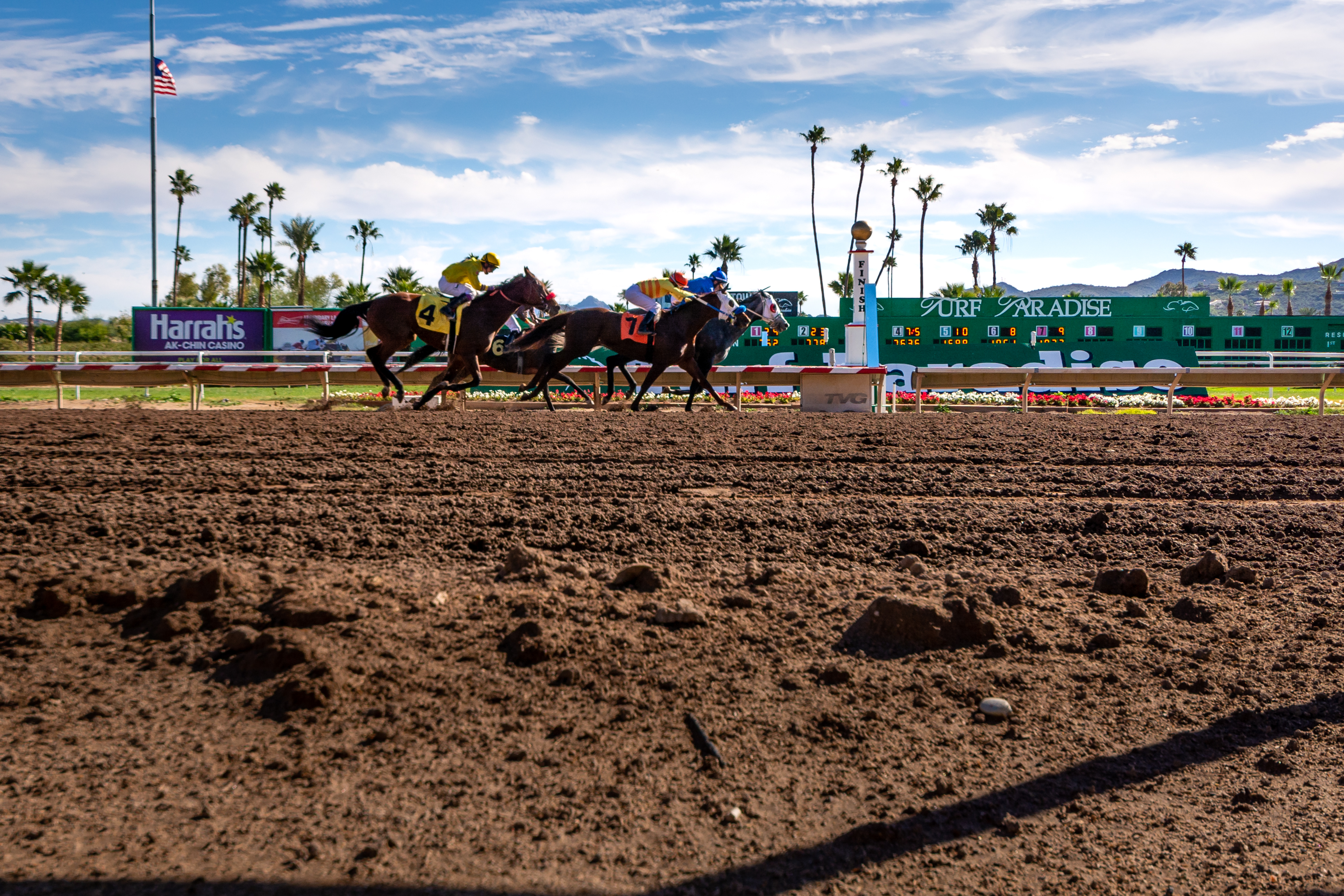
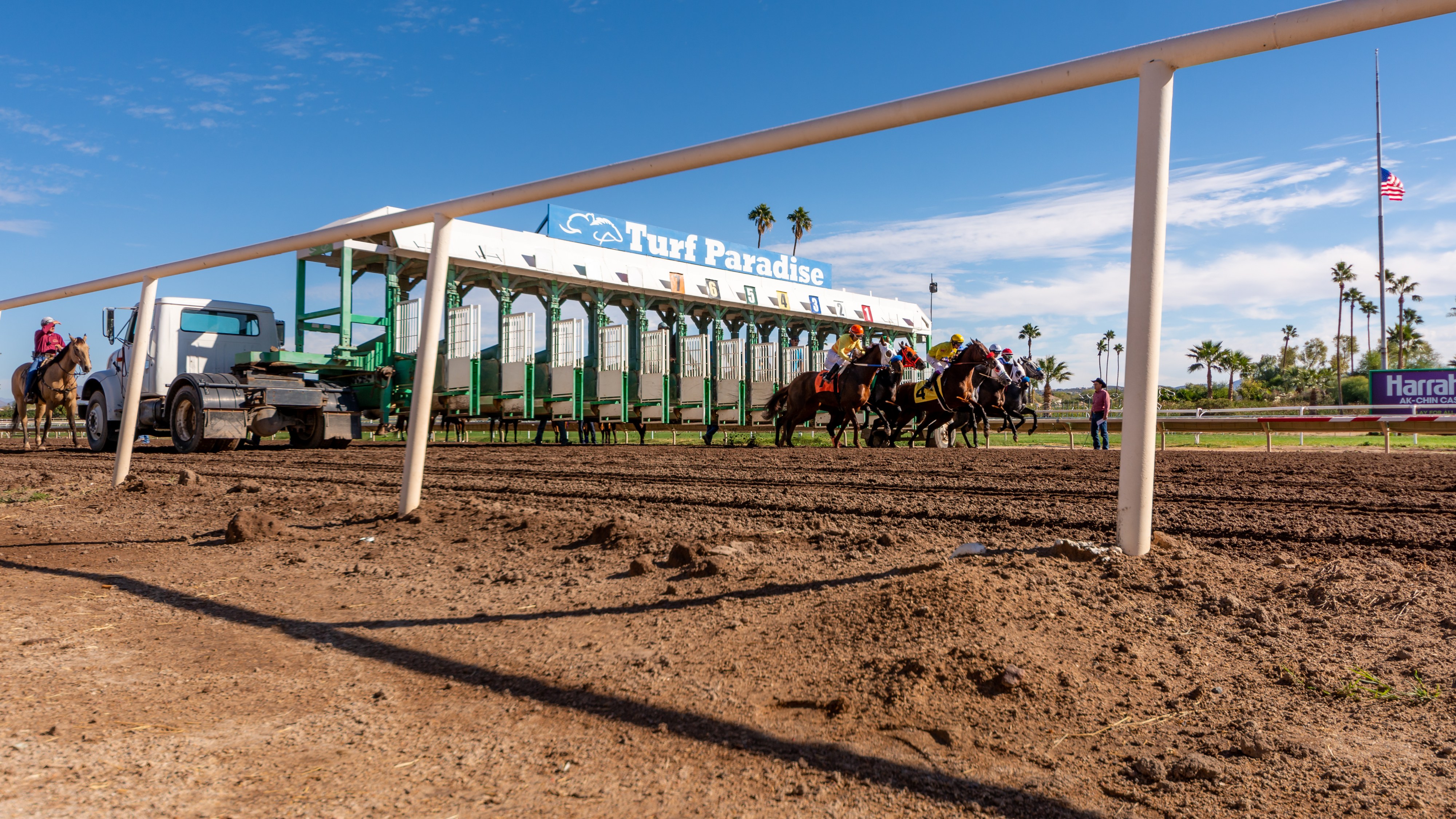
Turf Paradise is somewhat different: smaller, compact, short ways from parade ring to betting to food, drink and good viewing options. I was greeted by a super relaxed, serene and friendly atmosphere on the day.

Splendid sunshine always helps, of course. Nonetheless, this place possesses a bit of charm: you’re close to the action, the entry is free and I found food & drink prices really fair – that made it a lovely day out.

DSC_9811

There wasn’t a huge crowd in attendance for this his mid-week race day. But as this is such a compact place, it didn’t feel as lonely as it did at the bigger tracks.

The level of racing was nothing to shout about. Low-grade claimers and maiden races. In saying that, most horses turned out in the parade ring looked incredibly well presented. Beautiful shiny coat, clean and fit.

DSC_9786

What surprised me what the relatively light use of the whip by most jockeys. There was certainly no excessive use of whip here – in fact, I felt the crop was used rather sparingly accompanied by mostly hands and heels riding.

In summary: I would go racing here again. I absolutely my day at Turf Paradise. Certainly enjoyed it much more than at Unlike at Aqueduct (okay, maybe little unfair, it was winter and freezing cold when I visited), Golden Gate Fields and Los Alamitos.

DSC_9565

Racecourse Review: Canterbury Park

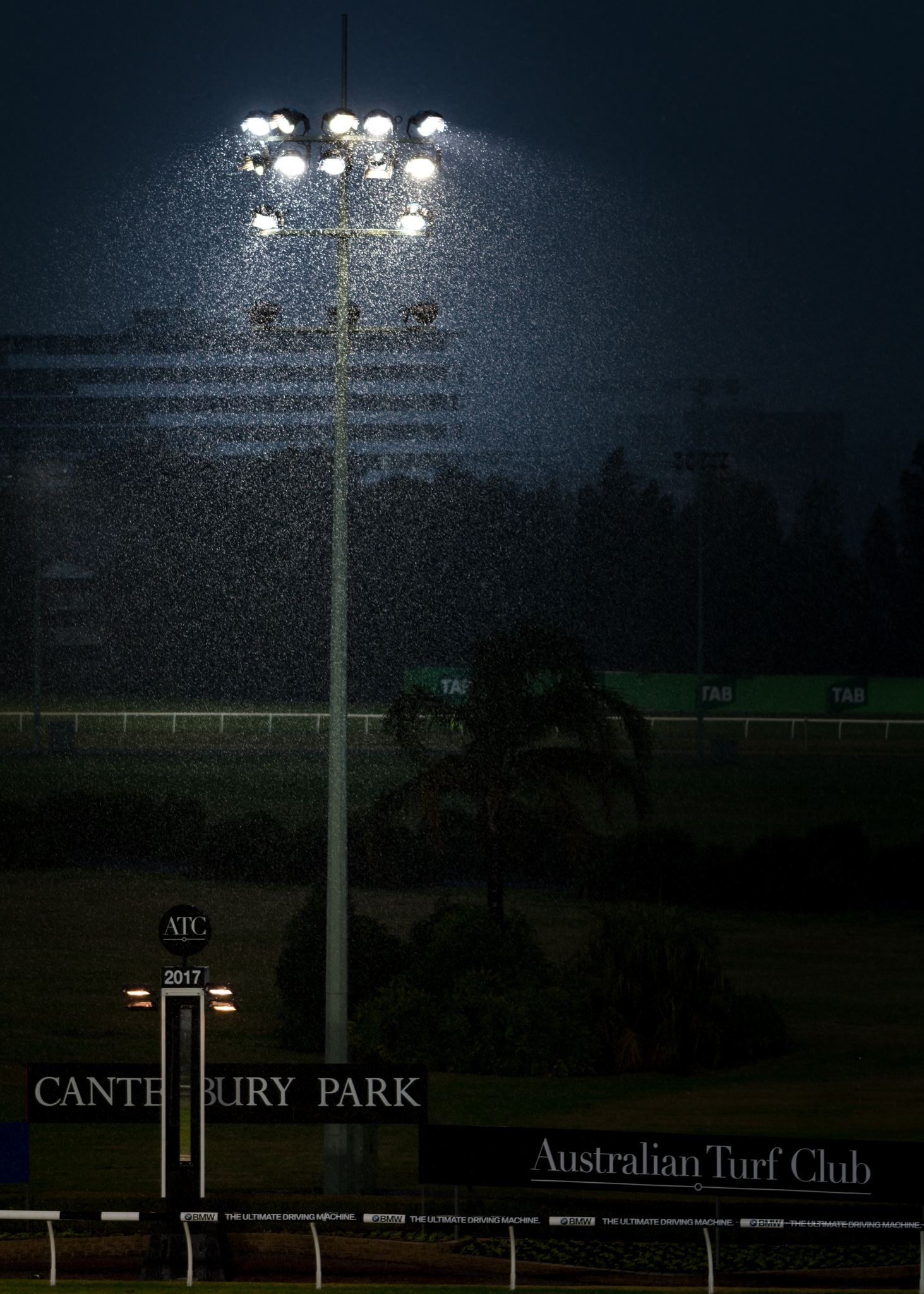
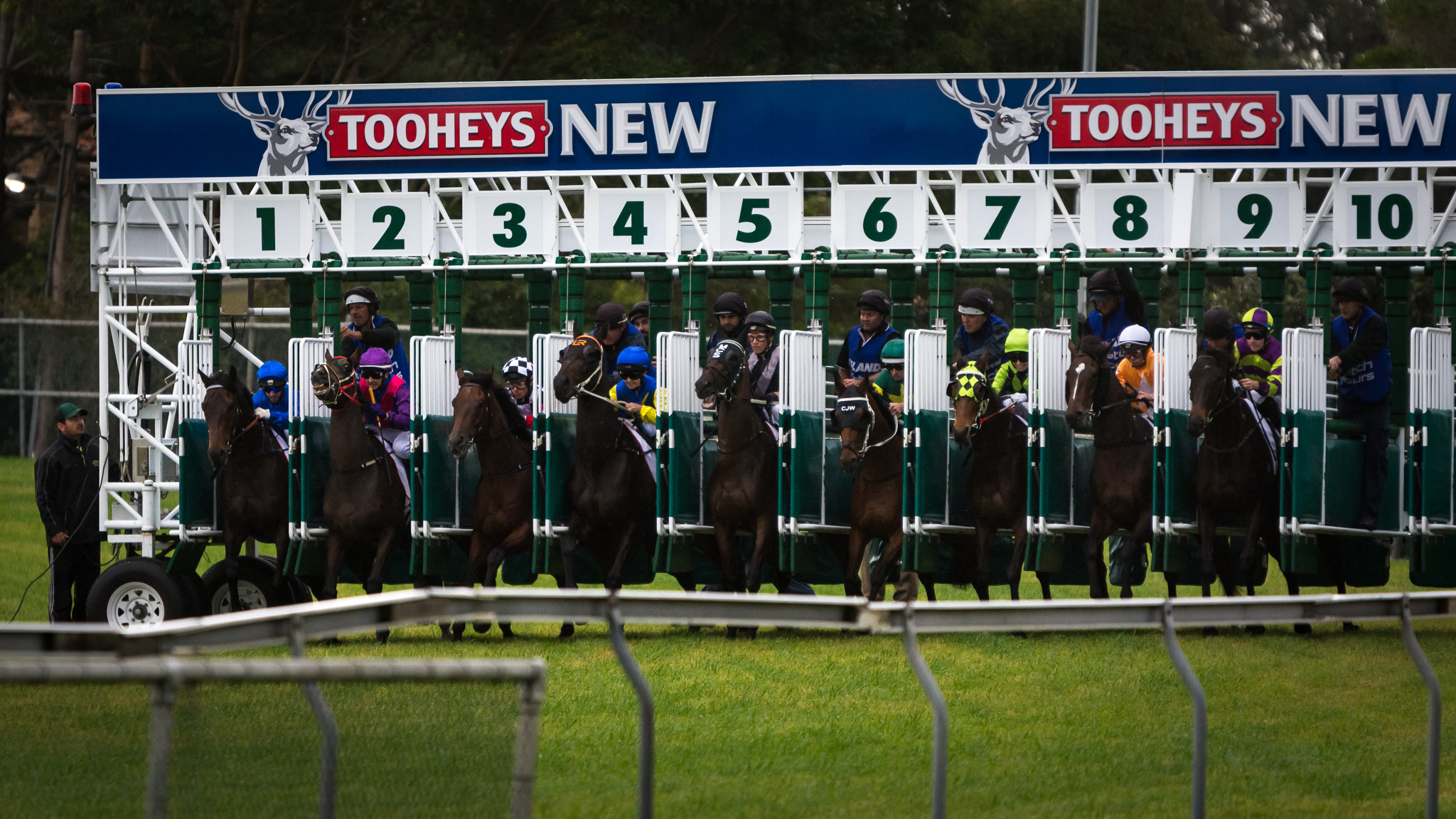
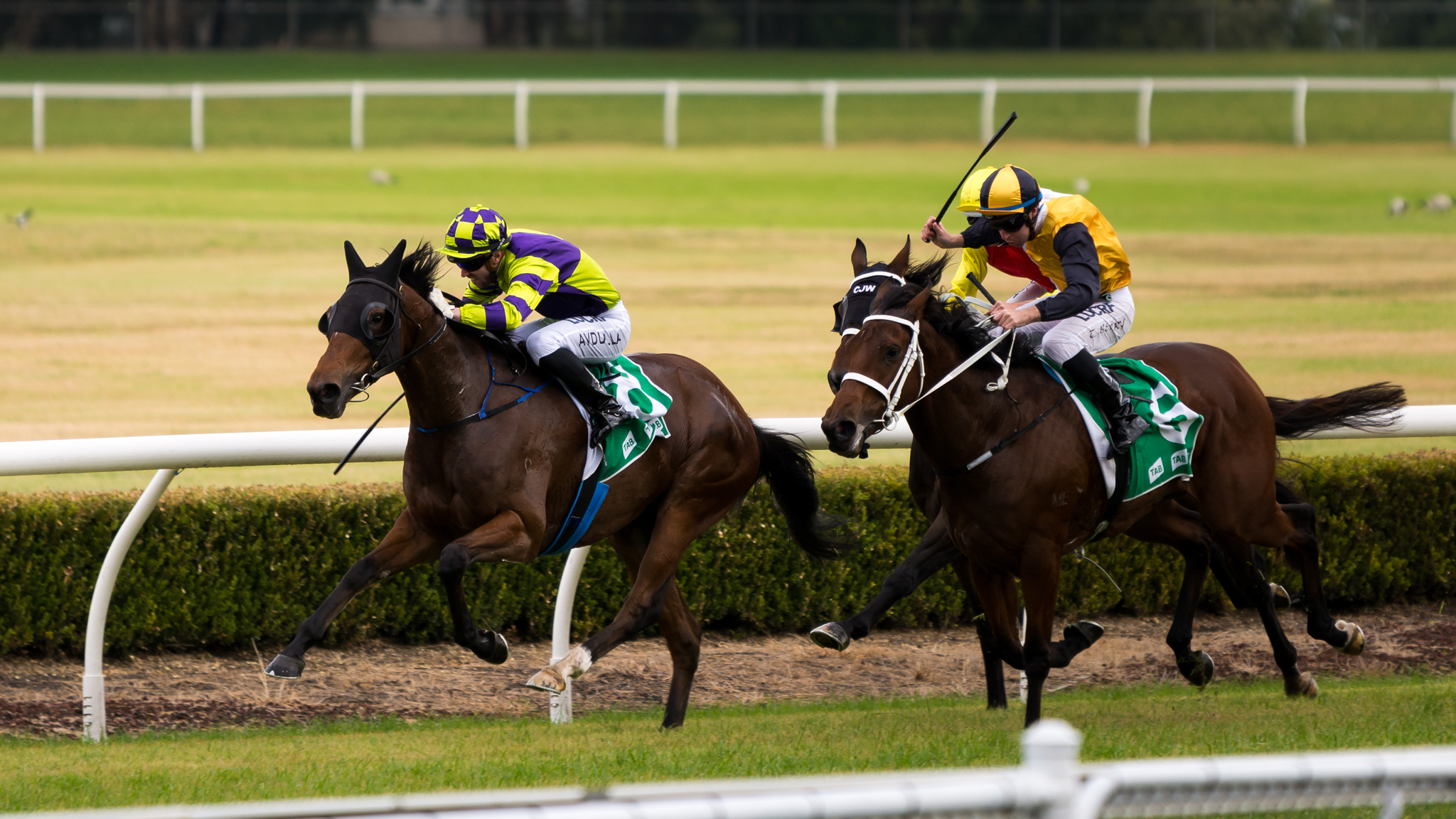
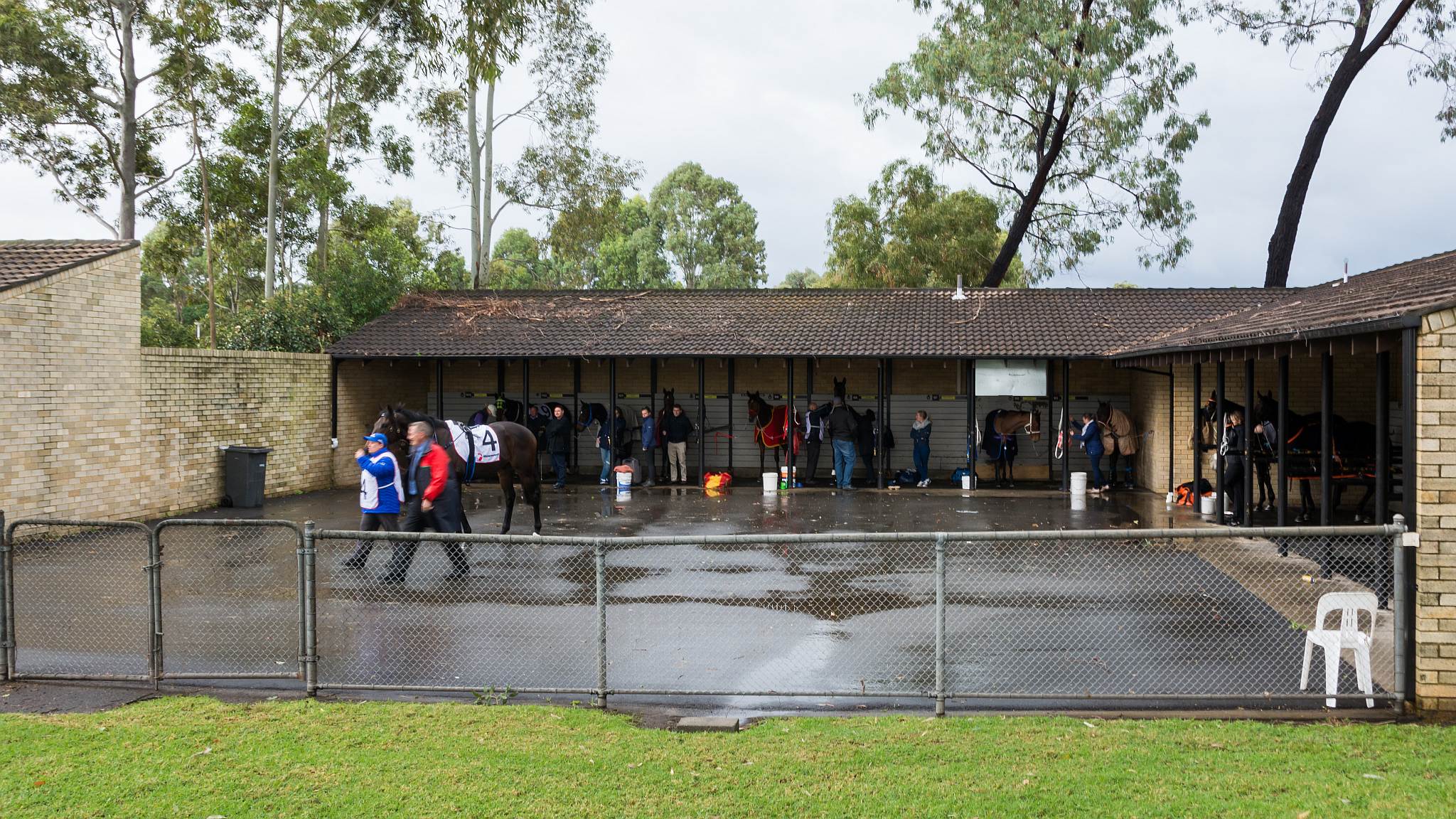
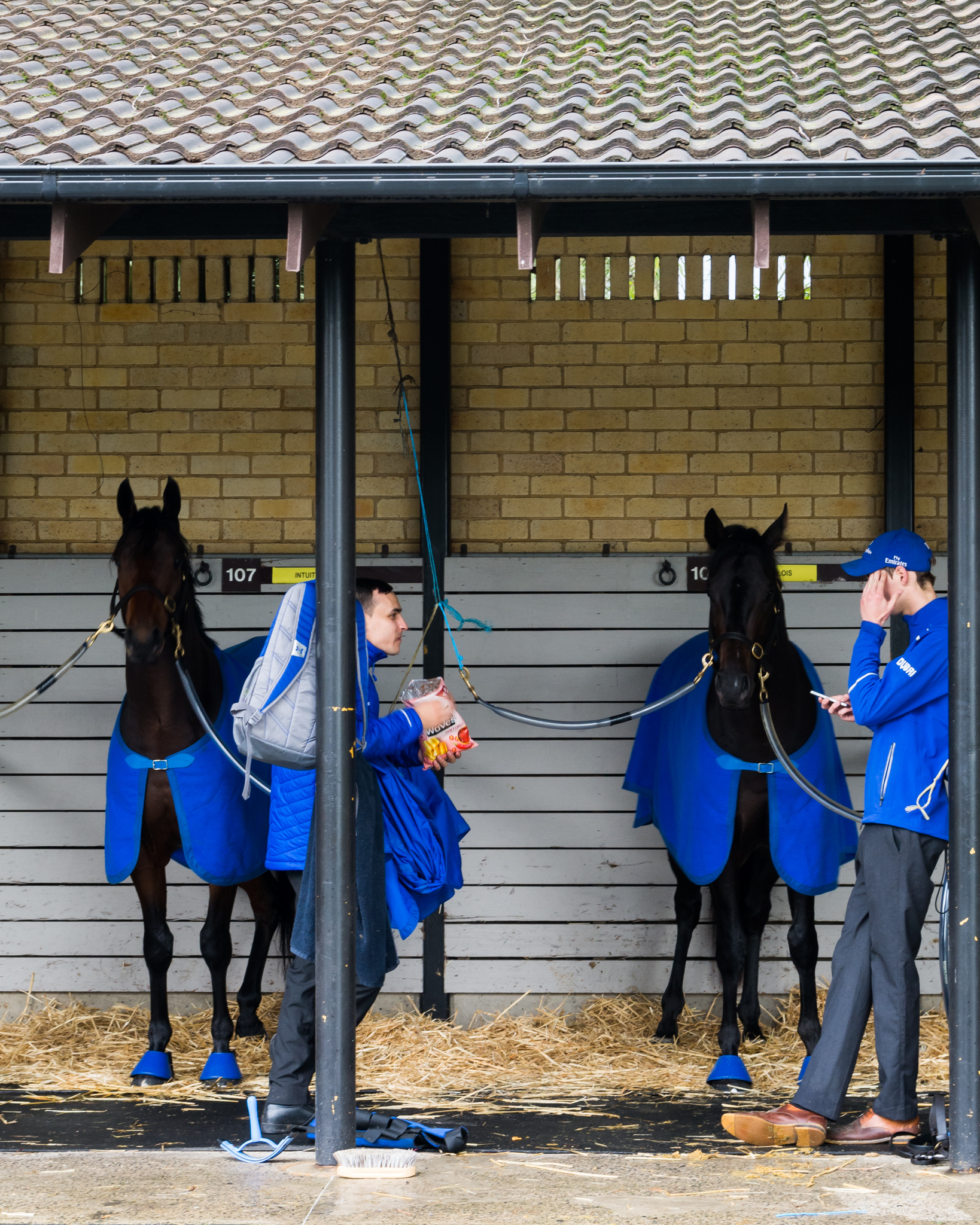
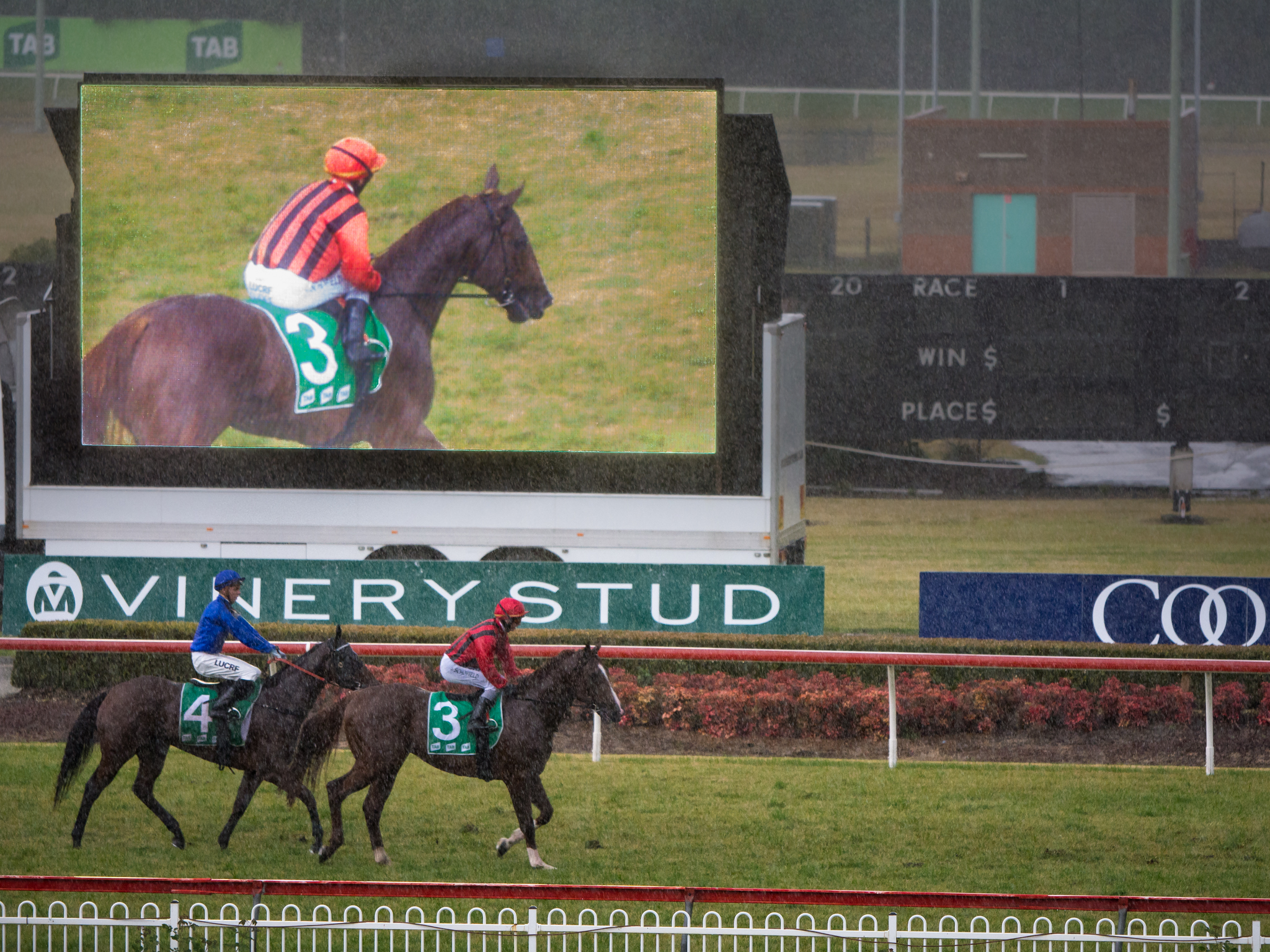
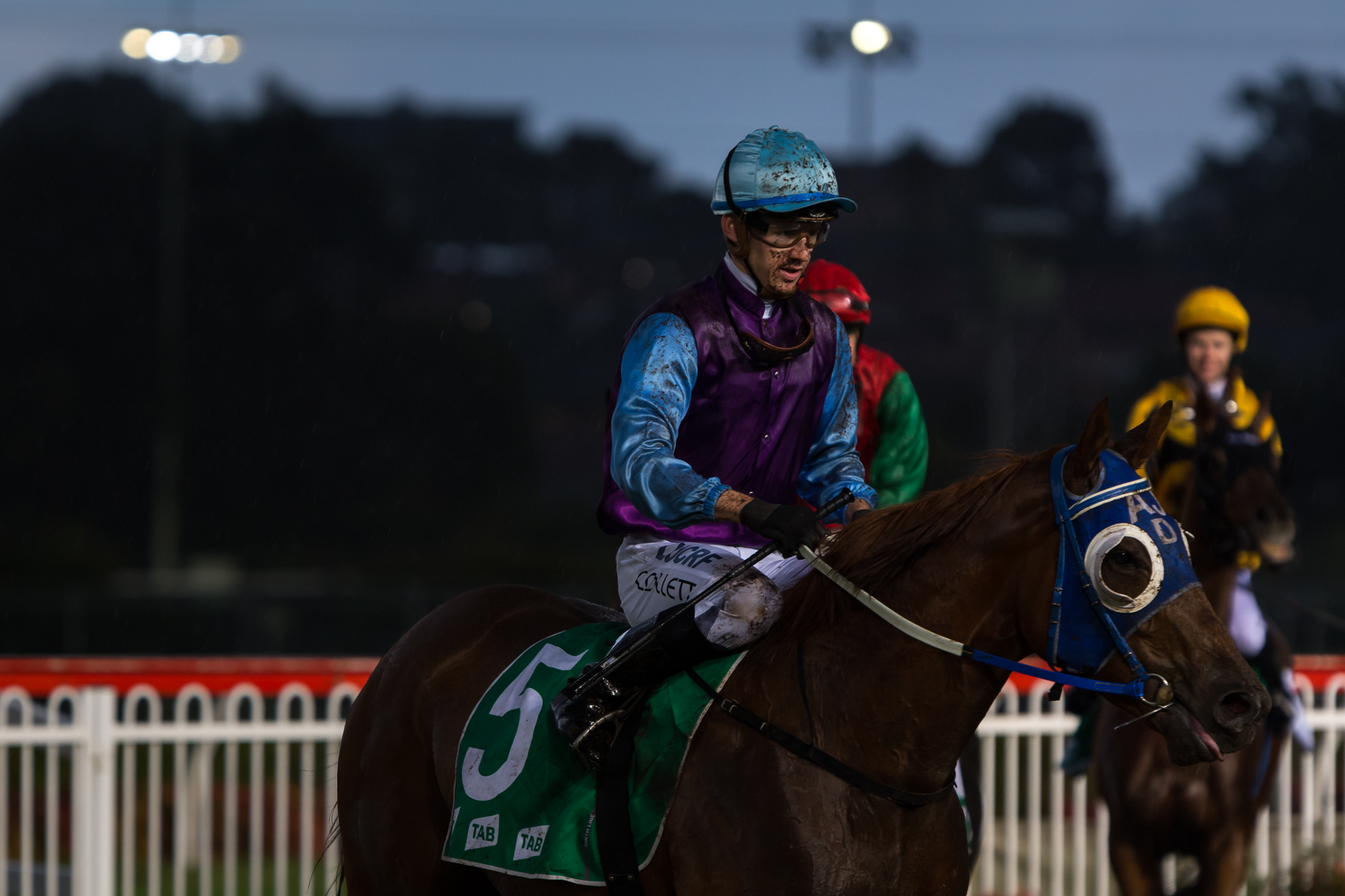
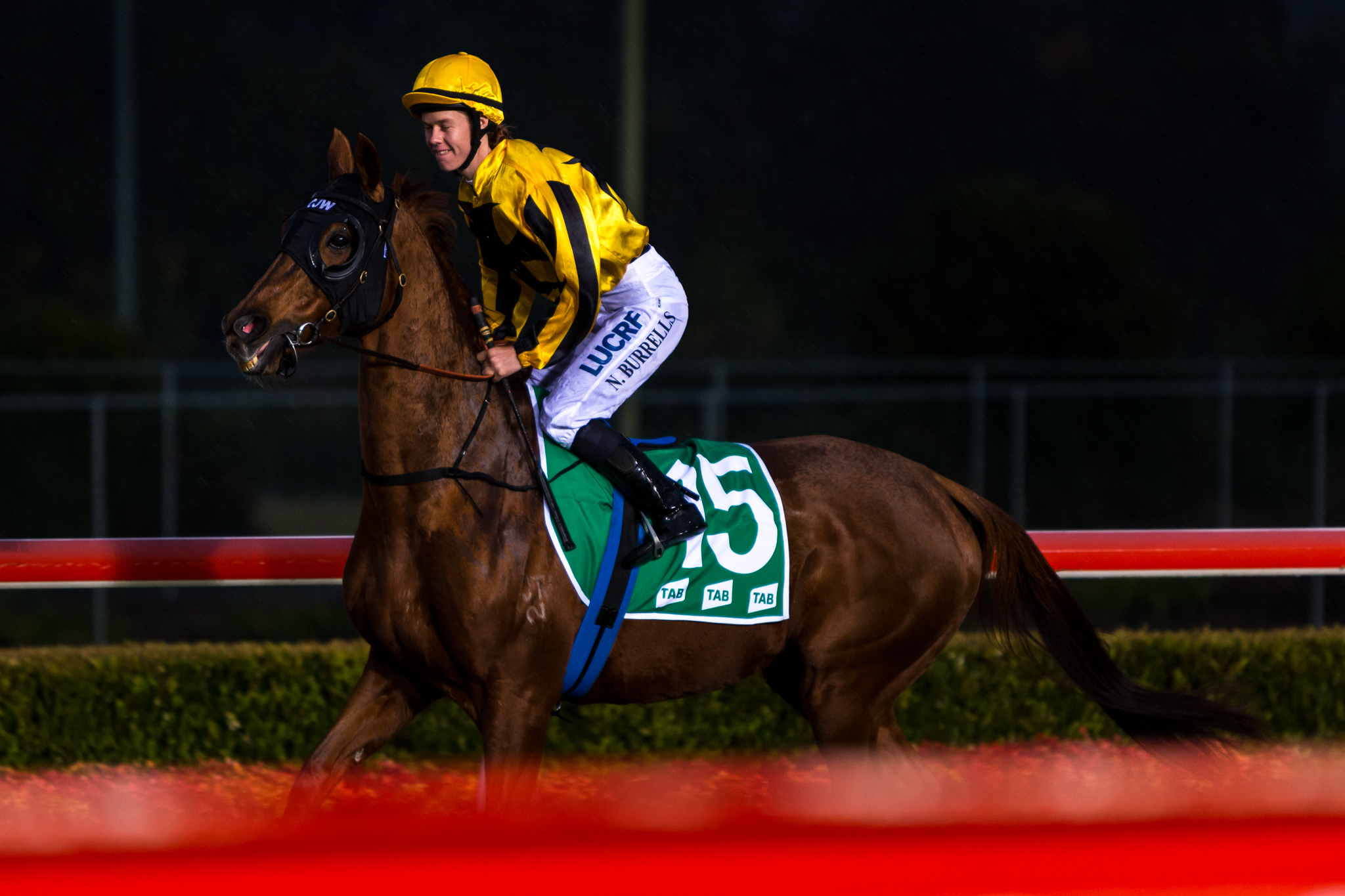
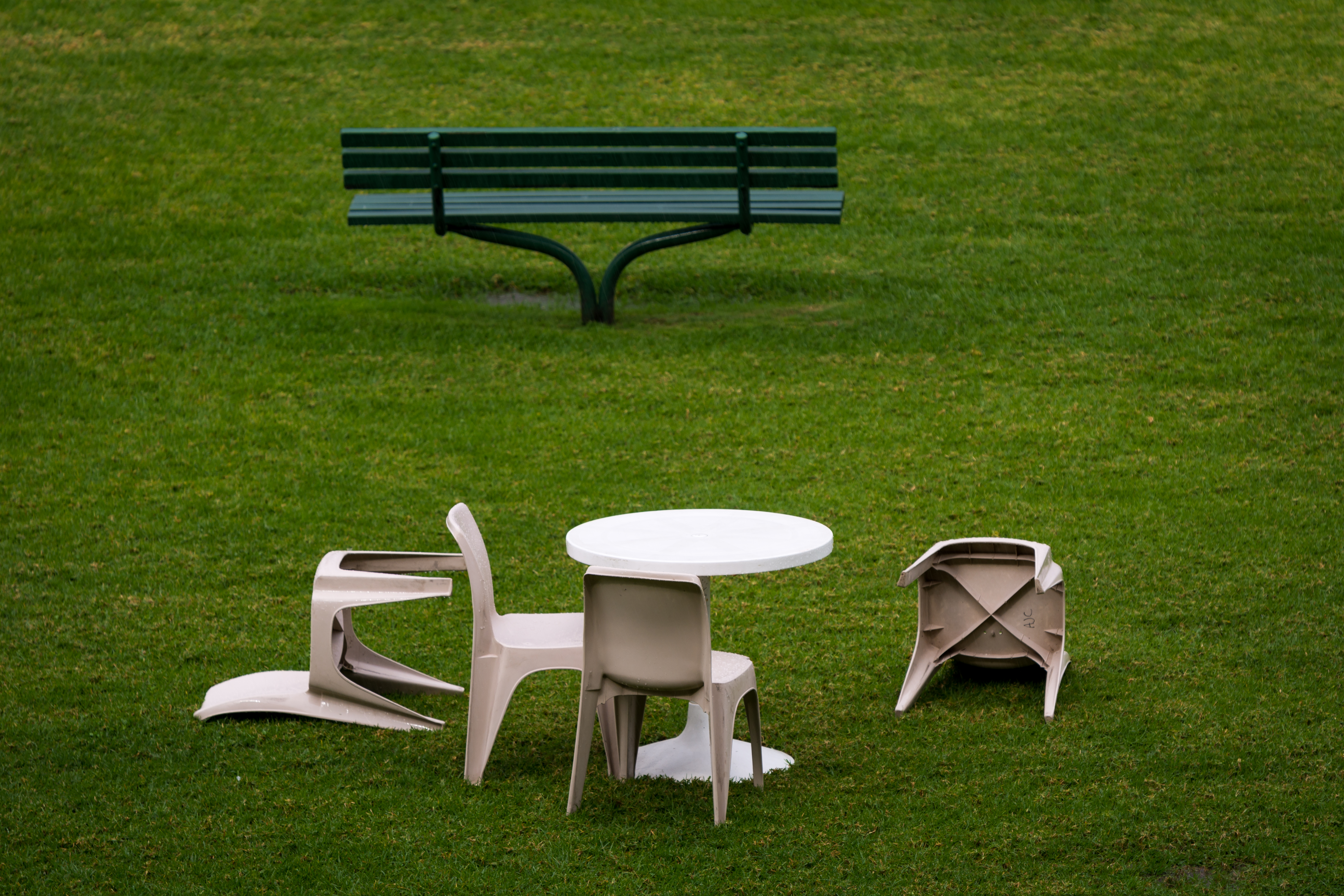
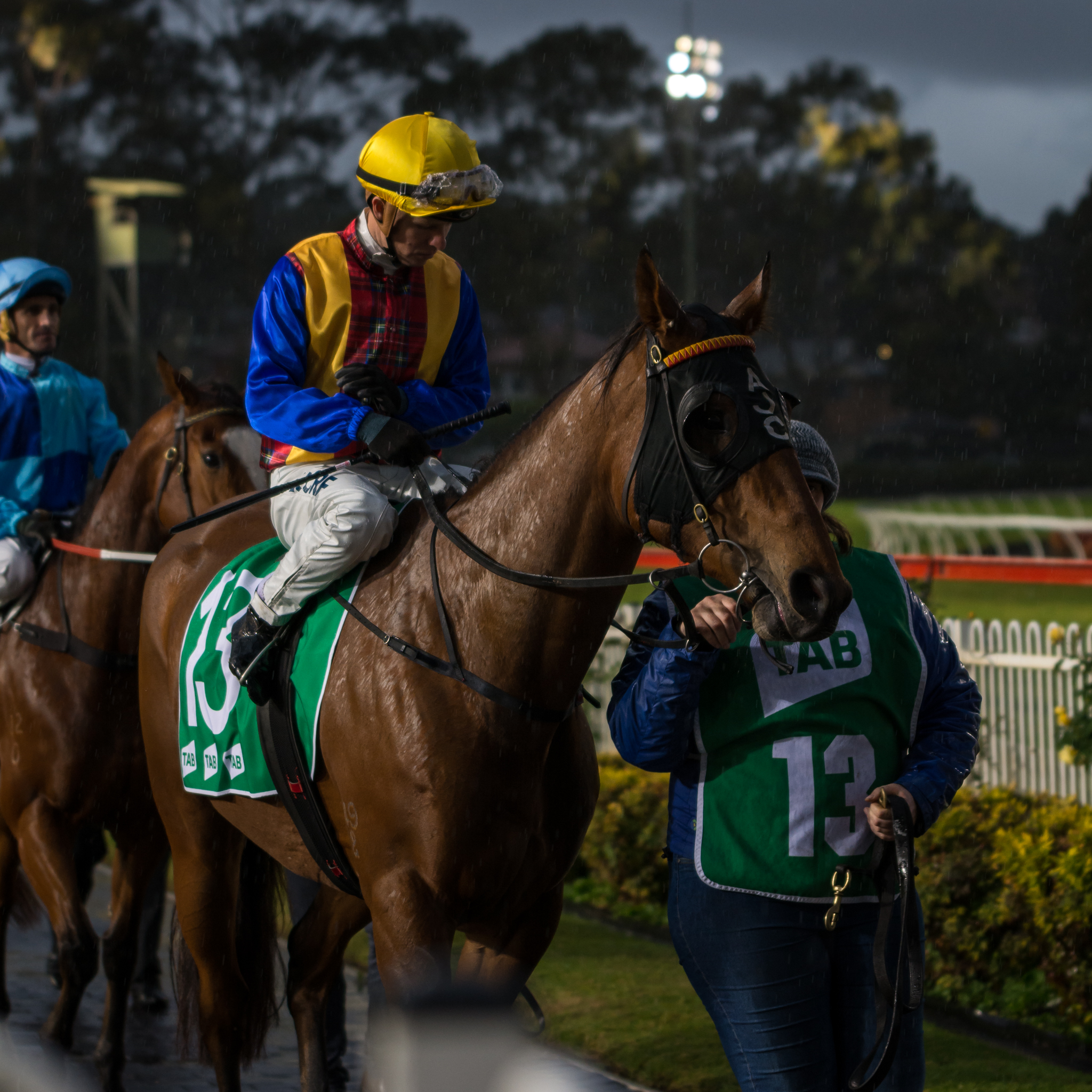
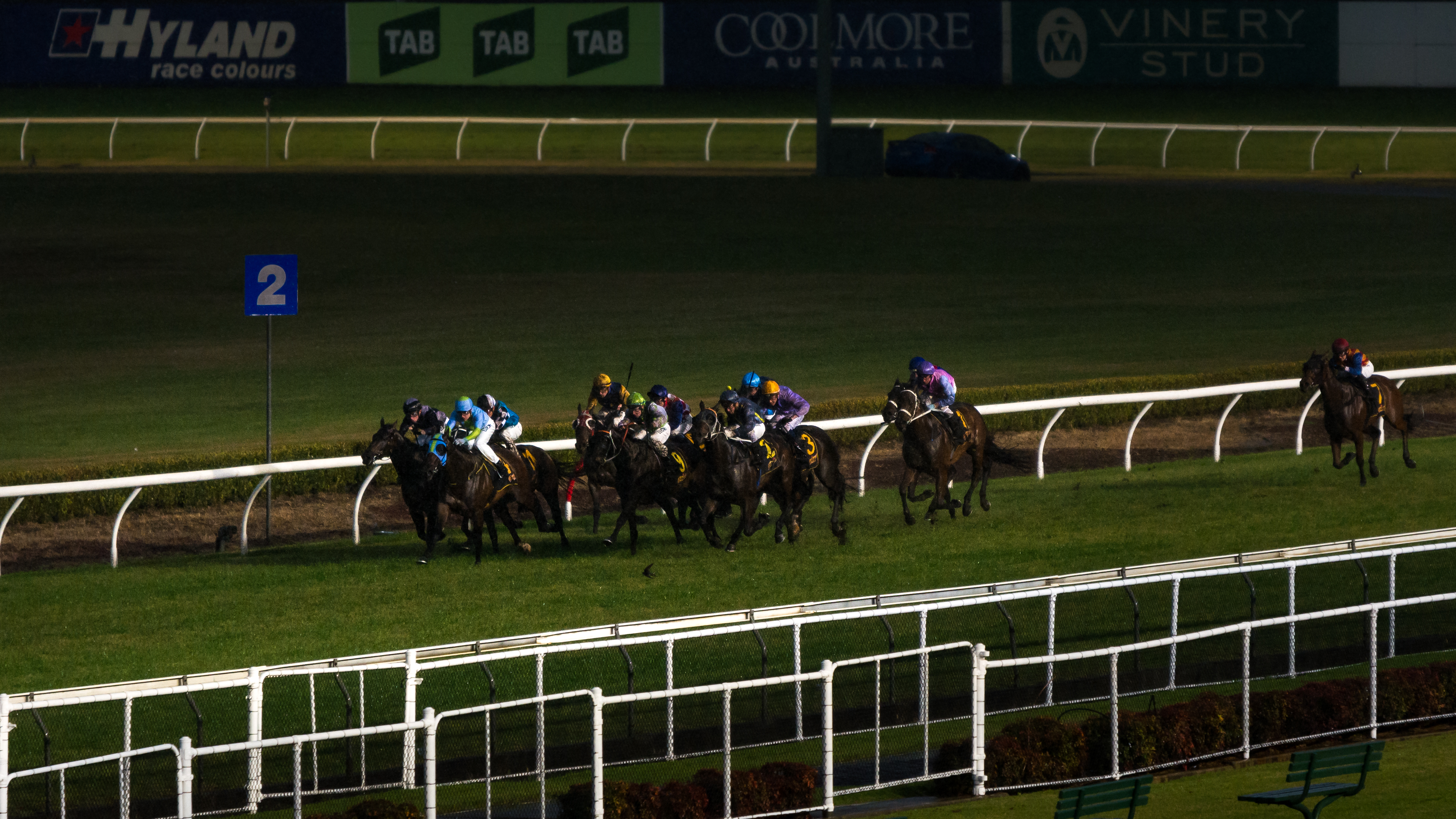
What a day here in Sydney – it’s my first day in the big city on the East Coast of Australia; a day literally drowned in rain! So instead of a walking tour and ferry trip along the world renowned Harbour Bridge It’s plan B:  the opportunity to visit local race track Canterbury Park!

Parking on-site, no problem. A gentlemen pulls up beside me. “This the public car park?”…. “Seems so”. We walk together – he tells me he’s English, loves Cheltenham, but lives “Down Under” for a while and comes racing today, on this desperate day, to support a friend, who owns a horse that runs today. Oh, and he went with Martin Pipe to school – same class, he says!

I It’s still raining. In fact it’ll never stop. At least it’s free to get in. The ground upgraded to a Heavy 10  – whatever that means. Heavy is heavy? Anyway, I fight against the weather. Whenever there is only a slight chance of not getting totally soaked in seconds, I jump out, the camera in my hands, and shot, cleaned the lens, shot and back to seek cover.

I have to say it was impressive that the meeting was not abandonment. Ground staff must have be doing some magic with all the rain. Lest we forget the ongoing thunderstorms.

On a day like this, mid-week, atrocious weather conditions, naturally there’ll be only some die-hard racing fans or gamblers making there way to a track. That says there was zero atmosphere, though I’ve been told Friday nights under the floodlights can be pretty special.

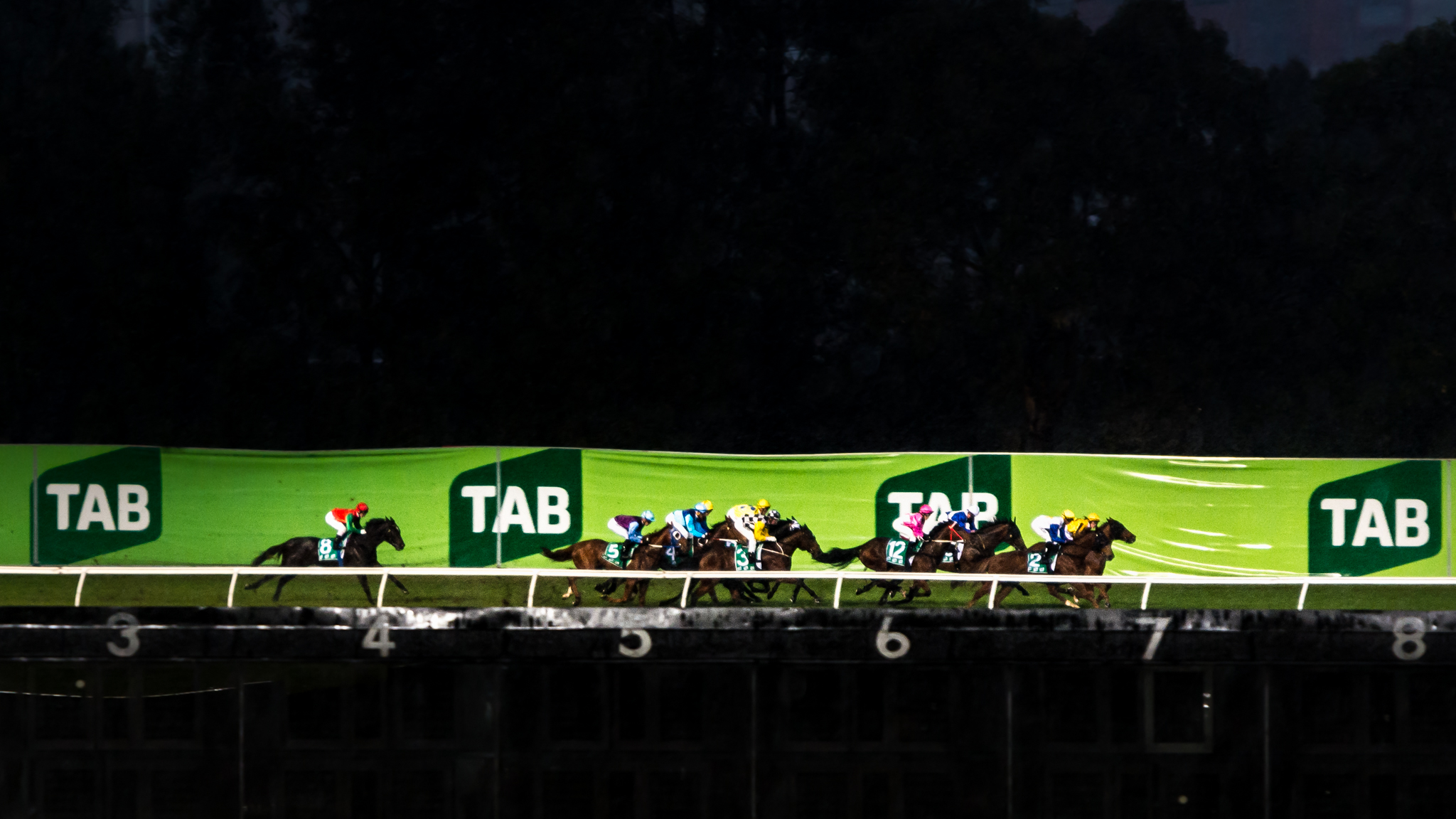
Photo Gallery – Canterbury Park, AUS – 7th June 2017; © Florian Christoph:
DSC_8540-Pano

DSC_8325.jpg

DSC_8533.jpg

DSC_8689.jpg

DSC_8621.jpg

DSC_8284.jpg

DSC_8306.jpg

DSC_8659.jpg

DSC_8474.jpg

DSC_8499.jpg

DSC_8204-Pano.jpg

DSC_8164.jpg

DSC_8212.jpg

DSC_8217.jpg

DSC_8360.jpg

DSC_8418.jpg

DSC_8707.jpg

DSC_8714.jpg

DSC_8247.jpg

DSC_8677.jpg

DSC_8684.jpg

DSC_8693.jpg

DSC_8728.jpg

DSC_8671.jpg

DSC_8293.jpg

DSC_8390.jpg

DSC_8618.jpg

DSC_8575.jpg

DSC_8666.jpg

DSC_8486.jpg

DSC_8588.jpg

Laytown Races

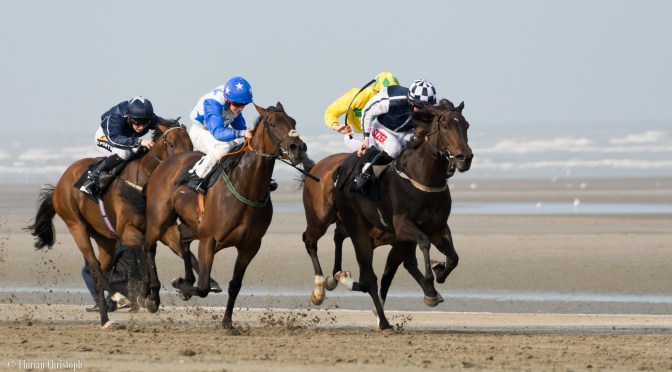
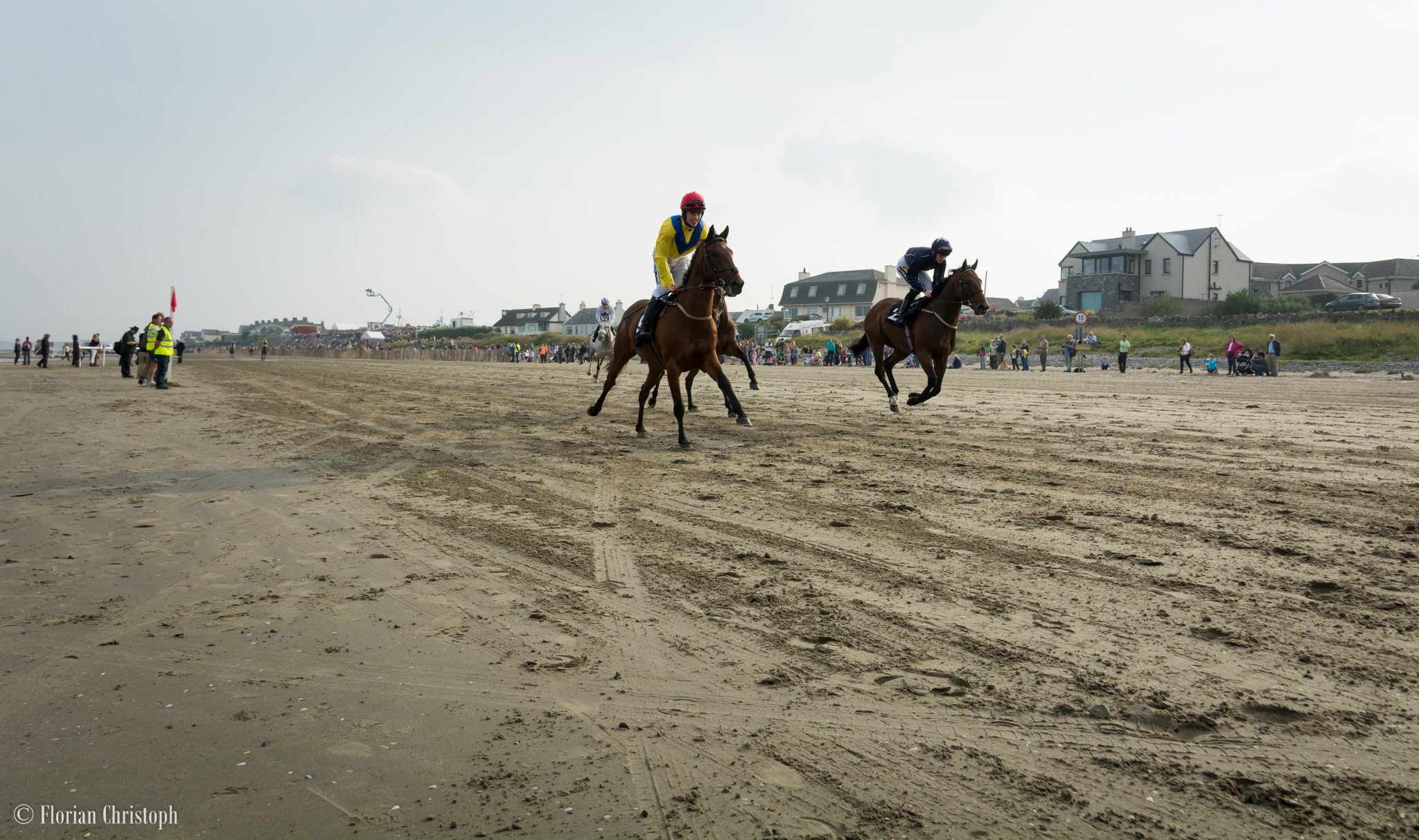
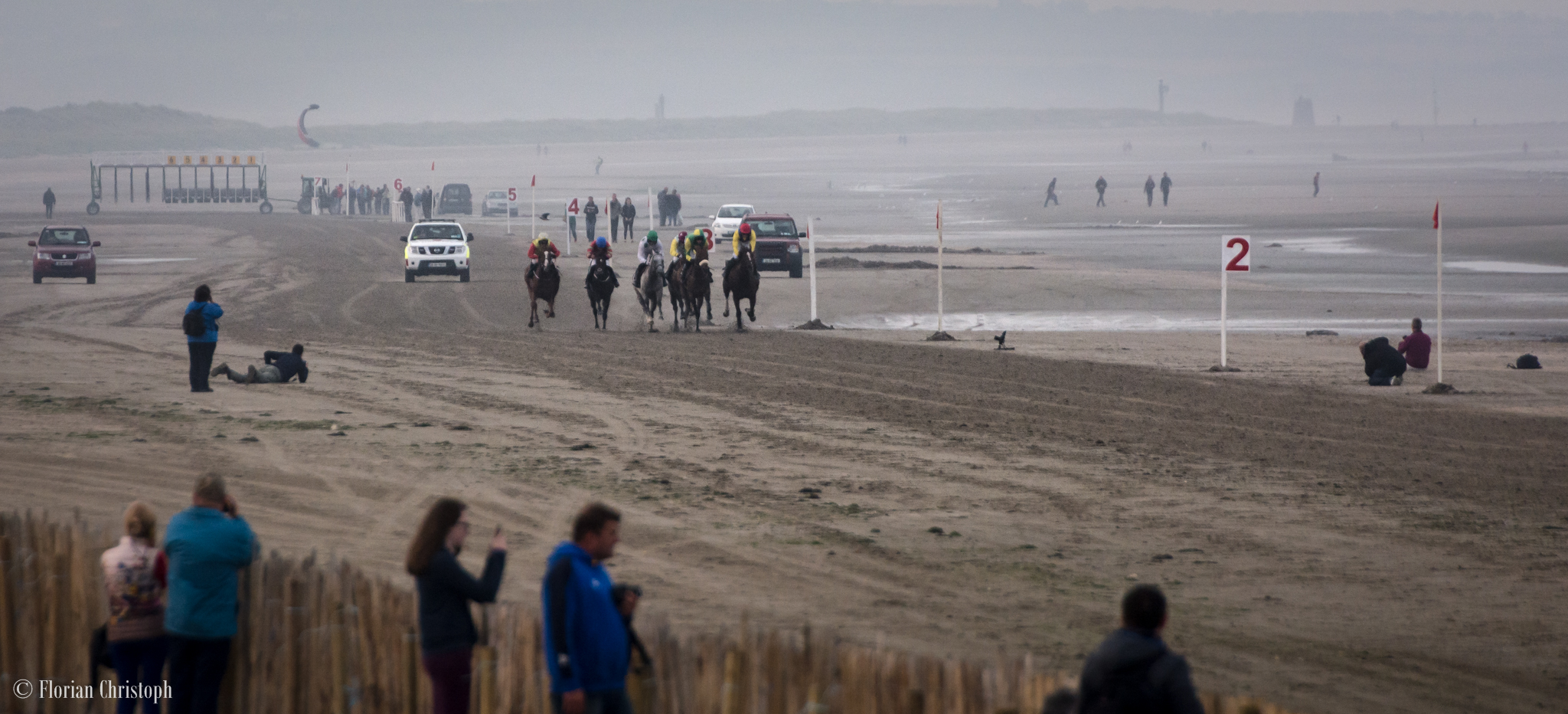
It couldn’t be more different from any other racetrack in the country – the Laytown Races – this annual meeting, not held on turf or an artificial surface….. but on the beach! This provides the most unique scenery one can imagine for a horse race: dunes, sand and of course the wild Irish Sea! Hosted for the first time in 1868 at Laytown beach, only a half an hour drive from Dublin City.

Once a year when the tide is low, they build this temporary track on the beach. It doesn’t take much: a rail, a winning post – and there you go – bring on the horses!

Laytown 3

Now, I finally made it to Laytown myself. Took me only four years living on the green island to get a Thursday off! The place was rocking when I arrived. No doubt helped by the Irish weather god who was kind enough and sent the sun as the guardian for the afternoon.

Crowds were enormous around the parade ring. It almost felt “Cheltenham like” – no joke! Down on the beach things where a bit more quit and relaxed. Someone sunbathing here, kids playing in the mud there… the horses thundering past only a couple of meters away! Where else do you get that close to these magnificent creatures in full flight?!

Laytown4

And that’s the reason why Laytown proves to be enormously popular with racing fans – locally and internationally. You’ll be hearing plenty of foreign accents…. and cameras! SO many people with cameras! And I mean, not the cheap ones. No, the really good DSLR’s, with some extremely expensive glass attached to it! I looked like an amateur with my D7100 and Tameron telephoto lens. But hey, I’am, after all….

So, what’s the conclusion? Well, Laytown is awesome! It really is. If you ever get the chance – go! You won’t be disappointed. It’s such a unique place… a really beautiful one….. a really special one.

Laytown5

Find some more of my shots from the day below. Open full size through click on the pic. Feel free to share as well of you like them.