
If you’re a racing fan it’s a mission impossible to escape the doom and gloom narrative that’s currently surrounding the sport.
An ever growing list of daily news and opinion pieces are questioning the future of the sport. Wearing blinkers or a hood may not be a sufficient avoidance strategy. Because right now everyone wants to have their say on all the things that (seemingly) go wrong in racing:

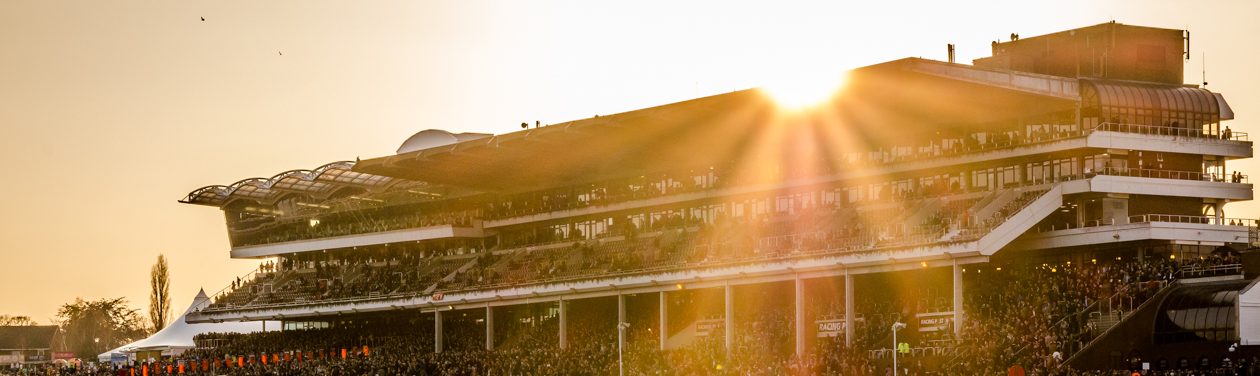
The 2024 Cheltenham Festival seemed to be a tipping point. Equine performances took a backseat; first overshadowed by negative chatter in the racing bubble (nothing new, it’s always doom and gloom) before it found its way – worryingly – to feature prominently in mainstream media as well.
Steep decline in ticket sales and lower attendance figures. Flat atmosphere. Boring races. Poor customer experience – That’s what made the headlines throughout the week of Jump Racing’s “Olympics”.

Even ITV, a (welcome) cheerleader for racing, that usually sees the world through Ed Chamberlin’s rose tinted glasses, couldn’t avoid the negative narrative that was shaping the week:
In truth, all this represents only the rotten cherry sitting on top of the spoiled cake that racing fans get served every day of the week.
Racing as a sport, most prominently jumps racing – but make no mistake, the flat has its own serious issues – finds itself well and truly in the midst of a seemingly unsolvable (?) polycrisis.
It’s not really about that one famous week in March in isolation. In fact, there are blindingly obvious reasons for what’s happening here – jumps racing’s flagship event simply magnifies the situation:
- 1. Racing isn’t that popular in an increasingly urban society these days.
- 2. Competition creates excitement: but the sport itself isn’t as competitive as it used to be.
- 3. It’s a seriously expensive day out.
All three aspects fit perfectly to everything we have heard and seen a couple of weeks ago at Cheltenham. However, they also fit the wider situation racing finds itself in. Which is not to say there aren’t ways to rectify some of the issues. There is!
Let’s expand on these points a bit and bring in a bit of personal experience as well. Especially on the first point. Even though, shifting social and cultural norms aren’t something entirely under the control of the sport, in fairness.
Racing’s popularity in the urban society
I work in a diverse environment and talk to people from all over the world on a daily basis. I also love talking racing and will tell people about it whenever they give me an inch.
The vast majority of all the different people I meet are – at best – ambivalent if it comes to racing. Some will call out the animal welfare aspect, a select few will question whether it’s appropriate to “beat horses with a whip for human profit”, while a small minority will actually have any engaging interest.
Make the test yourself: ask a selection of random friends or colleagues what they know and think about horse racing (I bet only a few are going to mention the whip – it’s a non-issue for most people).
Yet, you’ll find out that most people lack the most basic understanding about horse racing. More often than not, the lay person wouldn’t even know that the thoroughbred is a different breed to the horse they’ll see lurking over the wooden fence on the side of a country road.
The majority of modern, urban society neither has- nor ever had any touchpoints with horse racing. And why would they?
They’ve never given a reason to care about the sport and likely never will…. no matter the current number of permitted strokes with the whip or whoever the headline music act is that lines up after the racing on a Saturday evening card at Windsor.
Let’s not kid ourselves – even if the following notion sounds overly nihilistic: we live in a modern, urban society where racing won’t gain any significant mainstream relevance ever again. The horse has bolted, so to speak.
Does it mean the overall downward trajectory can’t be at least halted? I’d say it can, at least to an extend. Which leads to the other two points, as clear and obvious they seem.
Lack of competition devalues the product
There have been way too many articles written about customer experience, costs of going racing and the racing product itself – at least in the context of the recent Cheltenham Festival.
What I will add and want to emphasise: racing absolutely needs big clashes. The heavyweights of the sport must race each other – they’re the ones who can give the media, and in extension a wider public, a reason to be intrigued by what’s happening on the actual racetrack.
I’ll touch on the “care about what?” aspect later on again – for now, let’s call out the obvious: if genuine racing fans struggle to get excited about the racing product on offer, why should anyone outside the bubble waste any thought about it?
That leads to the final point, which in a sense is intrinsically linked to the quality of the racing product: the costs of going racing. It doesn’t make the product automatically exciting just because you merely insist you’re offering a premium product and this in itself warrants premium prices, IF the product that markets itself as premium doesn’t actually deliver a premium experience on AND off the track.
As convoluted as that may sound, Cheltenham is a prime example for this notion. Mind, it’s not the only place where it holds true. Admission to a large number of British racetracks is expensive as well. And not all of them can be classified as “premium venues”, let alone hosting “premium events”, by any means.
Food and drink doesn’t turn magically “premium” just because it costs racegoers an arm and a leg to buy a portion of chips fried in cheap vegetable oil and a run of the mill lager. Neither does it have to be “premium”. But decent value for money, that’s what it must be.
Let’s be honest: more often than not going racing is an expensive day out. And that’s even without having a single bet.
Tie that back to the actual sport on offer. If the racing isn’t good, because the best avoid each other or the field sizes are small, then the decline in attendance and interest in the sport is an entirely self-inflicted result. Because those in charge of the sport have it in their hands to make meaningful changes.
There’s an audience for Racing
Even if attendance figures were down at Cheltenham (and continue to fall across the sport, while multiple racetracks have closed worldwide also), clearly there remains an audience for the sport – certainly on these shores.
Thousands are still flocking to the bigger meetings and the smaller race tracks alike. There is a vibrant, engaged and real fan base: genuine racing fans.

That’s the kicker for me: instead of trying – in vain – to appease and attract an audience that will never be captured by the magic of racing, “the sport” – regardless of jurisdiction – needs to make every effort to create the best possible racing product AND experience to engage its core audience.
“Competition creates excitement.
Excitement creates engagement.
Engagement creates betting turnover.
Simple!“
Okay, it’s not that simple. Nothing ever is. Nonetheless, the key ingredients for a better racing product remain rather simple. It starts with great sport.
And continues with fair pricing for entrance, food and drinks. Let’s make a day out at the racecourse an attractive experience. In contrast: ripping off people, putting greed first? That’s what alienates fans.
Don’t stop there: more data, better data, reliable data. Help fans engage with the sport in a deeper way. Drive innovative media coverage through smart use of technology. Racing can feel pretty “old” and certainly isn’t at the forefront of driving innovation in sports coverage.
There’re opportunities aplenty: drones, helmet cameras…. you name it. Racing is such a visually exciting sport. Help TV and media operators to transport the spectacle in a spectacular way.
A more engaging atmosphere can also be created at the racetrack through technology. Let’s be honest, not much is happening between races. Technology can help create a richer atmosphere here as well.
The sport itself needs to be at the forefront of any marketing effort. You want people to care about the stories the racing produces. You want people to engage with the sport for the sport itself – not for the reasons of drinking and partying in a large open air venue with the half-hourly disruption of a bunch of horses running in circles.
Because that’s the exact opposite to creating meaningful fan engagement with the sport. Of course, that must include the betting side as well. Nobody can deny the fact these two are intrinsically linked, even if not for everyone. An attractive racing product makes for an attractive betting product as well, though.
Fan Engagement key to long-term viability
Julie Harrington did seem to grasp this aspect in her now infamous statement when she touched on the “need to grow our fanbase by encouraging new fans and retaining existing fans”.
Yet, these platitudes aren’t anything new. We heard them before. And we’ll likely hear them again. Tangible action is needed. Urgently.
In my view (and it’s only an opinion, perhaps a wrong one): before the BHA tries (in vain) to miraculously gain any new fans, how about creating a better experience for existing fans first?
Imagine: fans in love with the sport who are also in love with their personal experience of their beloved sport, are the best marketing tool there is: they’ll tell other people. They share experiences, photos, videos and stories on social media.
They’re ambassadors for racing. Because fundamentally, humans who are passionate about something, always want to share this passion with other people.
On the flip side, most likely they’re as likely and passionate about telling other people how disappointed they are with the trajectory of their beloved pastime right now. This has a ripple effect, one way or the other.
Let’s make racing great again
Let’s conclude and bring this all back to a more positive outlook. There are obvious ways to improve the experience for racing fans (and punters).
Nothing comes cheap, and nothing will change magically overnight. But there are core themes that will create positive impact, if tackled and not left to linger for much longer.
Obviously, this is very much with British racing in mind. On the other hand, racing is struggling in many countries that are not Japan or Hong Kong (plenty to learn from their playbook, though).
- A revamped racing program: deliver regular clashes of the best horses and healthy field sizes. That’s creates excitement and betting opportunities for punters (if they can get on; that’s a topic for another day).
- Value for money: a day at the races must be affordable, inviting and providing an engaging experience.
- Enhanced experience through technology: bring racing into the 21st century. Drive stronger engagement with the sport through data, use of new technologies and exciting multi-media coverage.
Although this may sound overly simplistic, ultimately, it boils down to one question – one that racing authorities need to find answers for ASAP. This question encapsulates everything mentioned beforehand:
“Why should I care about horse racing?“

 Horseracing - International . COM